

New Delhi, July 28, 2026 (Yes Punjab News)
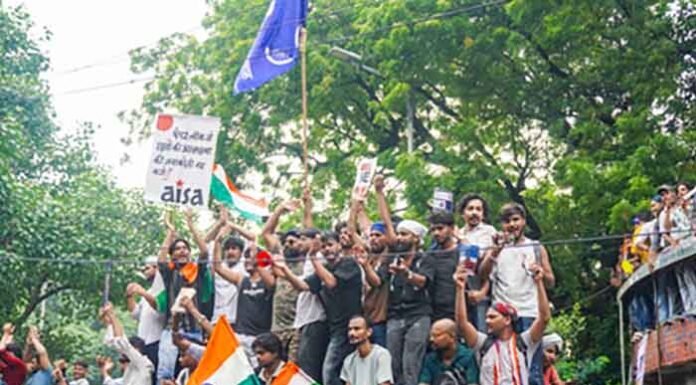
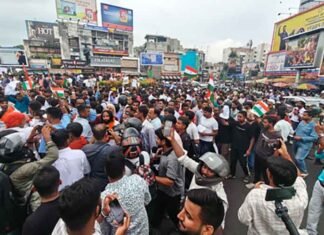
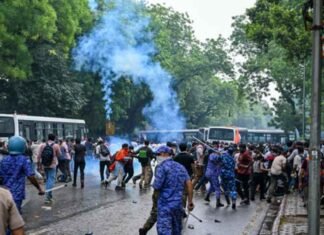
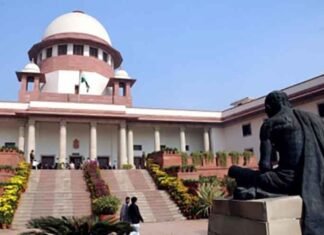
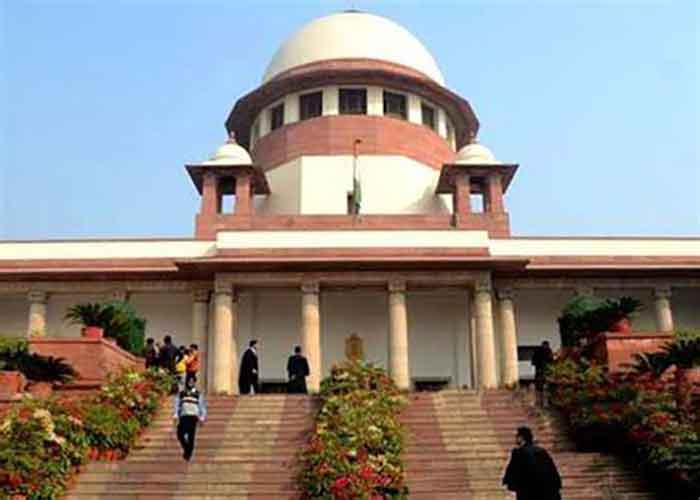
The Supreme Court on Tuesday indicated that it may constitute a Special Investigation Team (SIT) headed by a retired Supreme Court judge to investigate allegations of police excesses as well as attacks on police personnel during the recent nationwide protests over the alleged NEET-UG 2026 paper leak.
A Bench comprising Chief Justice of India Surya Kant and Justices Joymalya Bagchi and V. Mohana observed that the allegations before the court prima facie warranted an independent and impartial investigation. The Bench sought responses from the Union government and the governments of Assam, Bihar, Kerala, Madhya Pradesh, Maharashtra, Uttar Pradesh and West Bengal.
“The allegations made by petitioners prima facie make out a case for an independent and fair probe. Such a probe will effectively address the allegations,” the Bench observed.
Pending further orders, the apex court directed that no coercive action be taken against student protesters who have no criminal antecedents. It also ordered the immediate release of all minors detained during the protests and directed that students arrested solely for participating in the demonstrations be released if they have no criminal background.
The court clarified that this protection would not extend to individuals with criminal antecedents.
To preserve evidence, the Bench ordered authorities to retain CCTV footage, drone recordings, body-worn camera footage, wireless communications, PCR logs and other electronic records related to the protests. It also directed that personal information and digital data collected from student protesters be preserved but not made public for the time being.
During the hearing, the Bench observed that the incidents required a transparent inquiry and indicated that a high-powered committee under the supervision of a retired Supreme Court judge could be considered after receiving responses from the Centre and the states.
The court also remarked that the existing framework governing public protests may require review. Observing that protests are an integral part of a democracy, it said an appropriate mechanism should be activated to deal with such situations.
Senior advocate Gopal Sankaranarayanan, appearing for one of the petitioners, argued that the issue extended beyond Delhi and involved police action against student protesters across multiple states. Referring to videos allegedly showing police personnel without identification badges using force, he sought an independent inquiry under the supervision of a former Chief Justice of India.
Senior advocate Shyam Divan referred to allegations of the use of electric shock batons and videos purportedly showing police officials threatening protesters with false narcotics cases. Senior advocate Shadan Farasat submitted that violence in Bihar was more severe than in Delhi and claimed that around 150 people, mostly minors, remained in custody despite the state’s announcement that criminal cases against protesters would be withdrawn.
Advocate Prashant Bhushan cited the case of a volunteer allegedly detained and abandoned after supplying food to protesters, while senior advocate N. Hariharan sought transfer of related petitions pending before the Delhi High Court to the Supreme Court and continuation of directions preserving electronic evidence.
Appearing for the Union government and Delhi Police, Solicitor General Tushar Mehta supported an independent investigation, stating that the court was dealing with two sets of petitions—one alleging police brutality against students and another concerning injuries sustained by police personnel.
He submitted that if students had been assaulted, it was a serious matter, but added that nearly 250 police personnel had also suffered injuries. The Solicitor General suggested that anti-social elements may have infiltrated the protests and stressed that the truth must emerge through an impartial inquiry.
The Bench also observed that it would examine whether those responsible for attacks on police personnel were actually student protesters.
The matter has been listed for further hearing next week.
The Supreme Court is hearing a batch of petitions seeking nationwide guidelines to safeguard the constitutional right to peaceful protest following allegations of excessive police force during demonstrations in Delhi and several other states over the alleged NEET-UG 2026 paper leak. On Monday, the court had underscored that peaceful protest is a constitutionally protected right and indicated that a uniform national protocol may be required to balance the rights of demonstrators and law enforcement agencies.
 FOLLOW NOW