
New Delhi, July 29, 2026 (Yes Punjab News)
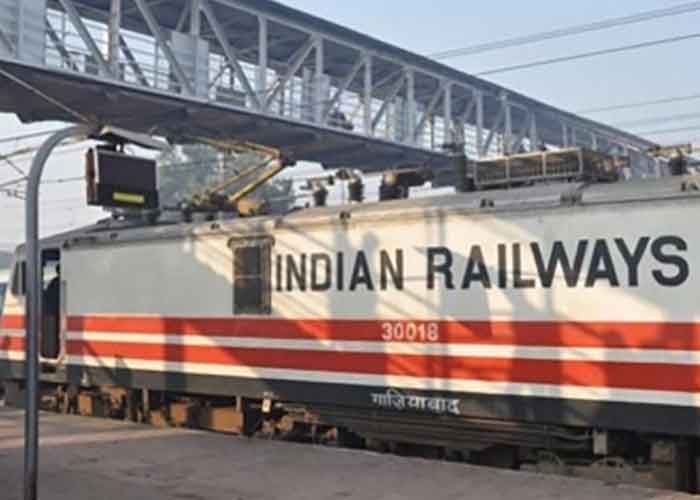
Railway Minister Ashwini Vaishnaw on Wednesday informed the Lok Sabha that Indian Railways has recorded only two consequential train accidents during the current financial year 2026-27 so far, attributing the improvement in safety to technology-driven interventions, infrastructure upgrades and strengthened maintenance practices.
In a written reply in the Lower House, the Minister said safety remains the highest priority for Indian Railways and the declining number of accidents reflects sustained efforts to modernise the railway network and minimise human error.
Vaishnaw said the indigenously developed Kavach 4.0 automatic train protection system has been commissioned on 2,490 route kilometres, covering the high-density Delhi-Mumbai and Delhi-Howrah corridors.
He added that Kavach implementation is currently underway on 21,937 route kilometres, with installation in progress on 7,435 locomotives and 1,200 EMU/MEMU trains.
According to the Minister, the system assists loco pilots in operating trains within prescribed speed limits by automatically applying brakes if the driver fails to respond. It also enhances operational safety during adverse weather conditions.
The deployment of Kavach includes installation of station equipment, Radio Frequency Identification (RFID) tags, telecom towers across railway tracks and optical fibre cable infrastructure to support seamless communication and train protection.
Describing Kavach 4.0 as a major milestone, Vaishnaw said it incorporates all key features required for India’s diverse railway network and marks significant progress in the indigenous development and deployment of an Automatic Train Protection System.
The Minister also highlighted several other safety initiatives undertaken by Indian Railways. These include the installation of electrical and electronic interlocking systems at 6,671 stations as of June 30, 2026, to reduce accidents caused by human error, and interlocking of 10,395 level crossing gates to improve safety at railway crossings.
He said complete track circuiting has also been provided at 6,671 stations to verify track occupancy electronically, while preventive maintenance of coaches and wagons continues to ensure safe train operations.
Indian Railways is also replacing conventional ICF coaches with safer LHB coaches. In addition, all unmanned level crossings on the broad gauge network were eliminated by January 2019, and railway bridges continue to undergo regular inspections, with repair works undertaken based on their assessed condition.
Vaishnaw further said fire safety measures have been strengthened through statutory fire notices in all coaches, while newly manufactured power cars, pantry cars and passenger coaches are being equipped with fire detection and suppression systems. Similar systems are also being installed in existing coaches in a phased manner by zonal railways.
 FOLLOW NOW