
Ahmedabad, August 2, 2026 (Yes Punjab News)
Indian Railways on Sunday successfully transported a donor heart from Ankleshwar to Ahmedabad aboard the Mumbai Central–Gandhinagar Capital Vande Bharat Express, marking the second such life-saving operation in just two days.
The donor heart was retrieved from Jayaben Modi Multi Speciality Hospital in Ankleshwar and transported on Train No. 20901 for transplantation at the U.N. Mehta Institute of Cardiology and Research Centre in Ahmedabad.
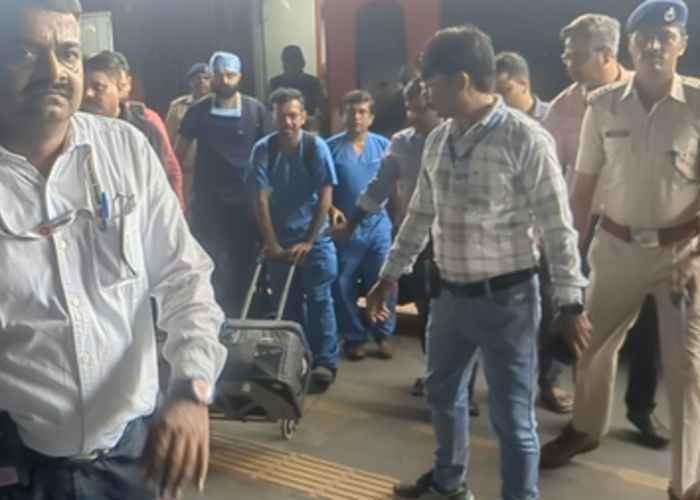
To facilitate the time-sensitive mission, the Vande Bharat Express made a special halt at Ankleshwar railway station for the first time, allowing the organ to be swiftly loaded into Coach E-01. Upon the train’s arrival in Ahmedabad, officials from the Railways, Railway Protection Force (RPF) and Gujarat Police created a green corridor from Platform 1 to ensure rapid transportation of the donor heart to the hospital.
According to Western Railway, the transplant procedure will be carried out by the specialist medical team at the U.N. Mehta Institute of Cardiology and Research Centre.
The operation comes just two days after another donor heart was transported from Surat to Ahmedabad on the same Vande Bharat service in what was described as India’s first donor heart transport by train. That mission was completed in nearly two hours despite heavy rainfall and flood-like conditions in parts of Gujarat.
Railway officials said the consecutive operations demonstrate the growing role of high-speed rail services in supporting emergency medical care, particularly organ transplantation, where every minute is crucial to preserving the viability of donor organs.
Western Railway coordinated closely with hospitals, state police, medical teams and railway personnel to ensure the seamless execution of Sunday’s mission.
In a statement, the railway said the successful back-to-back transportation of donor hearts highlights Indian Railways’ expanding role in humanitarian and life-saving initiatives, adding that it remains committed to extending full support for similar emergency medical operations in the future.
 FOLLOW NOW