

Washington, August 2, 2026 (Yes Punjab News)
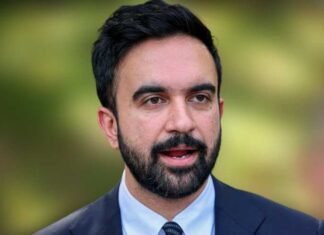
India’s Ambassador to the United States, Vinay Kwatra, has asserted that Pakistan eroded the very spirit of goodwill and friendship that formed the foundation of the Indus Waters Treaty (IWT), arguing that New Delhi’s decision to place the agreement in abeyance merely reflects the consequences of Islamabad’s long-standing conduct.
Writing in an opinion article, Kwatra said the treaty, signed in 1960, represented an act of goodwill by India despite the unequal distribution of river waters under its provisions. While India received control over the three eastern rivers accounting for about 20 per cent of the Indus basin’s water, Pakistan was allocated the three western rivers carrying nearly 80 per cent of the total flow.
He noted that the arrangement restricted development opportunities in several Indian regions for decades, yet India continued to honour its treaty obligations.
Kwatra said India’s decision to suspend the treaty followed last year’s Pahalgam terror attack, adding that the agreement would remain in abeyance until Pakistan credibly and irrevocably ends its support for cross-border terrorism. He maintained that India acted within its rights as a sovereign nation under international law.
Highlighting Pakistan’s record, the Ambassador referred to decades of wars, hostility and major terrorist attacks, including those on the Indian Parliament, Mumbai, Pathankot, Uri and Pahalgam. He stated that more than 40,000 people have lost their lives in India due to Pakistan-sponsored terrorism.
According to Kwatra, Pakistan consistently delayed or obstructed India-backed projects under the treaty framework through bureaucratic hurdles. He also cited attacks on Indian project sites, including the 2012 terrorist attack on the Tulbul Navigation Project, and said Pakistan opposed India’s efforts to modernise or renegotiate aspects of the treaty in light of technological advancements that could have expanded India’s hydropower capabilities.
He further argued that Pakistan’s current water scarcity stems primarily from domestic mismanagement rather than India’s actions.
Recalling the treaty’s preamble, Kwatra wrote that it had been concluded “in a spirit of goodwill and friendship,” but said Pakistan had spent decades undermining that foundation. He maintained that the suspension of the treaty simply acknowledges the reality created by Pakistan’s own conduct.
Responding to suggestions that India and Pakistan resume dialogue, Kwatra referred to Prime Minister Narendra Modi’s position that “terror and talks cannot go together,” adding that “terror and trade cannot go together” and “water and blood cannot flow together.”
He also criticised Pakistan’s attempts to portray India as a “water aggressor,” urging Islamabad to improve its water management and productivity instead of blaming its neighbour for domestic shortcomings.
Concluding his remarks, the Ambassador said that if Pakistan genuinely seeks cooperation with India on bilateral issues, it must first dismantle the terror infrastructure it has built.
 FOLLOW NOW