

Chandigarh, August 2, 2026 (Yes Punjab News)
In a significant step to strengthen Punjab’s campaign against substance abuse, the Bhagwant Mann government is set to introduce the Community Bridge Model (CBM), a structured 90-day rehabilitation programme designed to provide continuous recovery support to drug victims after they leave de-addiction centres.
The initiative, introduced under the state’s Yudh Nashean Virudh campaign, aims to bridge the critical gap between institutional treatment and community-based recovery by extending professional care to patients in their homes after they are declared medically fit for discharge.
Under the new model, patients will first complete medically supervised detoxification at government de-addiction centres. Rehabilitation will begin before discharge, with mandatory psychoeducation sessions for family members to prepare them to support the patient’s recovery.
During the first month after discharge, patients will receive intensive tele-counselling through three to four sessions every week, along with periodic mandatory dope tests. Any patient who tests positive will be reassessed by a psychiatrist for further treatment. In the following six weeks, counselling sessions will gradually reduce to one or two per week before the programme concludes with a final review and mandatory dope test after 90 days.
The model also incorporates a three-tier follow-up mechanism. Counsellors will immediately contact patients who miss scheduled sessions, followed by intervention from supervisors and family members where necessary. Patients showing signs of relapse or serious safety concerns will be counselled to return to a de-addiction centre for further treatment.
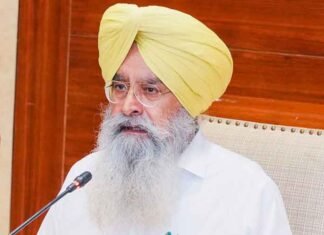
Health and Family Welfare Minister Dr Balbir Singh said the Community Bridge Model represents a major advancement in Punjab’s anti-drug strategy by shifting the focus beyond detoxification to sustained rehabilitation within communities. He said the programme is expected to improve long-term recovery outcomes, reduce relapse rates and enhance the efficiency of de-addiction services.
The minister said the initiative is currently being piloted in Amritsar, Hoshiarpur, Moga and Mohali before being expanded across the state.
Punjab presently has 56 government de-addiction and rehabilitation centres and more than 540 Outpatient Opioid Assisted Treatment (OOAT) clinics. While many patients have benefited from institutional treatment, the government observed that the absence of structured post-discharge care often increased the risk of relapse. The new model is also expected to improve bed availability at treatment centres by enabling clinically stable patients to continue recovery safely from home under professional supervision.
 FOLLOW NOW