

Chandigarh, August 2, 2026 (Yes Punjab News)
Twelve years after the Haryana Police (Amendment) Act, 2014 made it mandatory to establish District Police Complaints Authorities (DPCAs), the Haryana Government is yet to constitute a single such authority anywhere in the state, raising concerns over the implementation of long-pending police accountability reforms.
The statutory provision came into force on August 1, 2014, requiring the establishment of a District Police Complaints Authority in every district or, where necessary, a common authority for two or more districts.
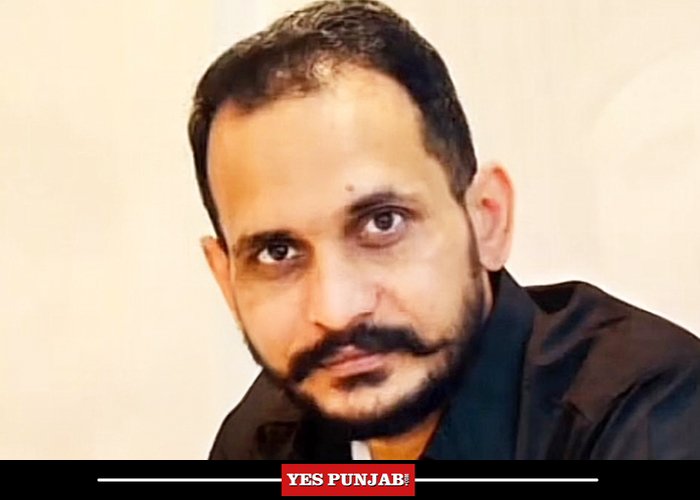
Advocate Hemant Kumar, who practices at the Punjab and Haryana High Court and specialises in legal and administrative matters, said the prolonged delay has undermined the objective of strengthening independent oversight of the police. He said only the State Home Department could explain why the mandatory district-level bodies have not been constituted despite the clear legal requirement.
The 2014 amendment, enacted during the Bhupinder Singh Hooda-led government, replaced the earlier single-member complaint mechanism with multi-member Police Complaints Authorities at both the state and district levels. Each authority was envisaged to comprise a Chairperson and up to three members.
While the Haryana Government constituted the Haryana State Police Complaints Authority in 2025 by appointing retired IPS officer Dr. R.C. Mishra as its Chairperson, along with retired IAS officers Lalit Siwach and Sumedha Kataria as Members, no District Police Complaints Authority has yet been established.
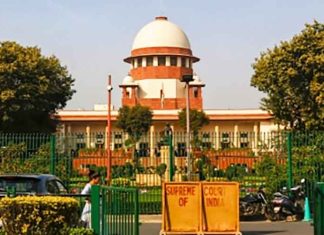
The appointment of Dr. Mishra is currently under challenge before the Punjab and Haryana High Court. The petition argues that the Supreme Court, in its landmark Prakash Singh vs Union of India judgment delivered in September 2006, directed that the Chairperson of every State Police Complaints Authority should be a retired Judge of the Supreme Court or a High Court.
Hemant Kumar noted that the Supreme Court’s police reforms judgment also required every state to establish Police Complaints Authorities at both the state and district levels. Under the court’s framework, State Authorities were intended to examine complaints against officers of the rank of Superintendent of Police (SP) and above, while District Authorities were to deal with complaints against police personnel up to the rank of Deputy Superintendent of Police (DSP).
However, he pointed out that Haryana’s legislation limits the jurisdiction of District Authorities to Inspectors and officers below that rank, making it narrower than the mechanism envisaged by the apex court.
The legal framework was further strengthened this year after the Haryana Legislative Assembly passed the Haryana Police (Amendment) Act, 2026 during the Budget Session. Following the Governor’s assent, the amendment came into force on May 5, 2026.
The revised Section 68-C significantly expands the powers of District Police Complaints Authorities by empowering them to take suo motu cognisance of complaints, entertain complaints filed by victims or their representatives through sworn affidavits, investigate matters referred by the National or State Human Rights Commissions, and dispose of complaints within six months.
The amended law also excludes anonymous and pseudonymous complaints, matters already pending before courts or statutory commissions, complaints relating to incidents older than three years, and police action during unlawful assemblies, protests, road blockades or disruptions of essential services.
According to Hemant Kumar, the Haryana Government had, through an order issued in September 2021, authorised the State Police Complaints Authority to discharge the functions of the yet-to-be-constituted District Authorities, including hearing complaints against police personnel up to the rank of Inspector. He maintained that the arrangement remains legally debatable since the law expressly mandates the constitution of separate District Police Complaints Authorities.
 FOLLOW NOW