
New Delhi, August 31, 2026 (Yes Punjab News)
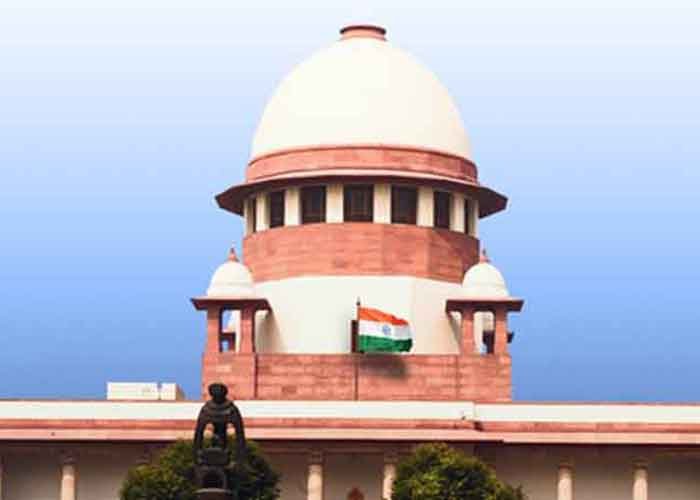
The Supreme Court on Monday declined to entertain a public interest litigation (PIL) seeking mandatory disclosure of ethanol content in petrol and greater transparency on the compatibility of ethanol-blended fuel with vehicles.
A Bench comprising Justices M.M. Sundresh and Prasanna B. Varale refused to entertain the petition filed by advocate N.K. Goswami, while giving him the liberty to approach the concerned High Court. “Go to HC and file it,” the Bench told Goswami.
Appearing in person, Goswami clarified that he was not challenging the Centre’s ethanol-blending policy but was seeking consumers’ right to know the composition of the fuel they purchase.
“I am not challenging the policy. I just want to know. I have the right to know. Even when we buy a packet of biscuits we know the ingredients,” he submitted.
Attorney General for India R. Venkataramani opposed the manner in which the plea was pursued and described it as a “proxy petition”. He also pointed out that the Supreme Court had dismissed a similar plea in 2025.
The petition sought directions requiring petrol pumps to display the ethanol percentage on dispensing nozzles and fuel invoices. It also sought an official vehicle-wise database on fuel compatibility and a transition framework for older vehicles that may not be compatible with higher ethanol blends.
Among other reliefs, Goswami sought safeguards against warranty, insurance or service-related disadvantages for vehicle owners where no alternative lower-ethanol fuel was available. He also sought an independent expert committee to examine the broader implications of the ethanol-blending programme.
The petitioner, who owns a 2018 Honda BR-V petrol vehicle, claimed that consumers were being offered fuel without information about its exact ethanol content or authoritative guidance on compatibility with their vehicles.
The plea referred to the NITI Aayog’s “Roadmap for Ethanol Blending in India 2020-25”, released in June 2021, which contemplated a phased transition and continued availability of lower-ethanol fuel for older vehicles. It also cited standards notified for E20 fuel and vehicle rollout timelines, noting that E20 engine-tuned vehicles began being introduced from April 1, 2025.
Goswami claimed that E20 petrol was widely introduced across the country in 2025 and that concerns had since arisen over pump labelling, invoice disclosures, vehicle compatibility information and availability of alternatives.
The latest proceedings follow the Supreme Court’s dismissal on September 1, 2025, of another PIL challenging the Centre’s rollout of E20 petrol as the default fuel. That petition had raised concerns about material degradation, safety, mileage, warranty and insurance issues for older vehicles.
The Centre has maintained that ethanol blending promotes energy security, supports farmers’ incomes and helps reduce carbon emissions. It has also cited Brazil’s use of higher ethanol blends and said E20 fuel offers better acceleration and ride quality while reducing emissions by around 30 per cent compared with E10.
With Monday’s order, the Supreme Court has left Goswami free to pursue his disclosure and consumer-rights concerns before the appropriate High Court.
 FOLLOW NOW