New Delhi, August 31, 2026 (Yes Punjab News)
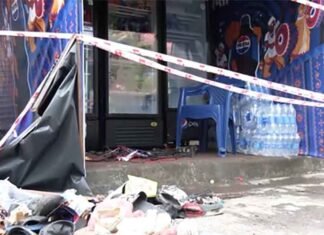
The Delhi Police have busted an alleged human trafficking network operating from a brothel on GB Road, rescuing two women who were allegedly forced into prostitution and arresting three women in connection with the cases.
Police said the victims were allegedly brought to Delhi on the promise of employment and subsequently forced into prostitution at Kotha No. 58 on GB Road.
In one case, a 26-year-old married woman and mother of three from West Bengal was allegedly lured with a job offer, brought to Delhi and sold to a brothel caretaker. In the second case, a 28-year-old woman was allegedly threatened with harm to her eight-year-old son if she refused to engage in prostitution.
The first case came to light on August 26, when a 60-year-old woman approached the Women Police Post and reported that her 26-year-old daughter, identified as ‘R’, had been missing from West Bengal since May 2. Police said R contacted her mother on August 25, claiming she was being confined at Kotha No. 58 and seeking help.
SI Kiran Sethi, in-charge of the Anti-Human Trafficking/Women Police Post, along with Women Constables Komal and Rashmi, subsequently reached the premises and rescued her.
During questioning, R allegedly told police that a man identified as Kalu, around 30, approached her at a railway station in West Bengal on May 2 and offered to arrange employment. He allegedly brought her to Delhi, took possession of her mobile phone and sold her to Geeta, a caretaker at the brothel.
Police said Geeta kept the woman at her residence for about a month before taking her to Kotha No. 58, where she was allegedly handed over to Reshma, described as the brothel owner. R alleged that she was then forced into prostitution and that the money she earned was retained by Geeta and another caretaker, Manju.
During the inquiry, another woman, identified as ‘J’, 28, approached the Women Police Post and was rescued from the same premises.
According to her statement, J had left her West Bengal home around two years ago following a dispute with her husband and mother-in-law, taking her eight-year-old son with her. While travelling towards Sealdah Railway Station, she allegedly encountered a woman who offered food and drinks to her son and later took them to her residence on the pretext of helping them.
The following day, the woman allegedly took J and her son to New Delhi Railway Station and then to Geeta’s residence by autorickshaw. J alleged that Geeta took them to Kotha No. 58 the next day, where she was promised work involving sweeping and mopping but was subsequently forced into prostitution.
J further alleged that she was threatened with harm to her son if she refused. Police said her earnings were allegedly retained by Geeta and Manju. Her son was later reportedly taken to a hostel by another caretaker, Paro, and J was allegedly permitted to meet him only once every three to four months.
Police are working to trace and recover the eight-year-old boy.
In the case involving R, Geeta and Manju were arrested. In J’s case, police identified the accused as Geeta, 55, Manju, 58, and Paro Khatoon, 29. All three are residents of GB Road and permanent residents of West Bengal and allegedly worked as caretakers or pimps at the brothel.
Police recovered Rs 55,000 in cash, along with tokens, a register and an electricity bill from the premises.
Both rescued women were medically examined at Lok Nayak Hospital and provided counselling. Their statements were also recorded, police said.
The accused have been booked under Sections 137(2), 143(2), 144(1), 64(2), 61 and 3(5) of the Bharatiya Nyaya Sanhita (BNS), along with Sections 3, 5 and 6 of the Immoral Traffic (Prevention) Act.
Police said the investigation also found that Reshma, Manju and Geeta had allegedly been involved in a similar human trafficking and exploitation case registered at Kamla Market police station in 2025. They are currently out on court bail in connection with FIR No. 139/25.
Further investigation is underway to identify and apprehend other suspected members of the network, determine their individual roles and trace the missing child.
 FOLLOW NOW