
New Delhi, September 1, 2026 (Yes Punjab News)
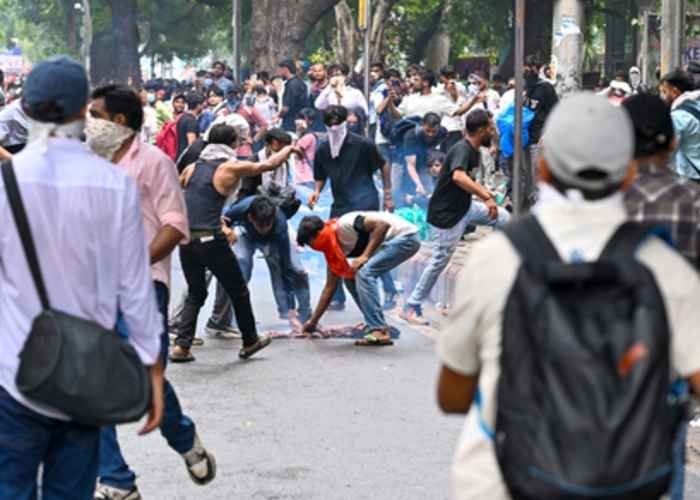
The Supreme Court on Tuesday quashed FIRs registered against student protesters in Delhi, Bihar, Maharashtra, West Bengal and Assam in connection with demonstrations held between July 20 and 25, and ordered that similar cases registered elsewhere in the country would neither be investigated nor pursued.
A Bench headed by Chief Justice of India Surya Kant and comprising Justices Joymalya Bagchi and V. Mohana invoked the court’s extraordinary powers under Article 142 of the Constitution, citing the future prospects of young protesters who had participated in peaceful demonstrations to raise their demands.
The court clarified that although the applications seeking quashing of the FIRs had been filed by the Centre through Delhi Police and by the governments of the five states, the benefit of the order would extend across India.
Accordingly, FIRs concerning the July 20-25 protests registered in any other state or Union Territory will also be treated as closed. The court further directed that no fresh FIR be registered in connection with incidents arising from those protests.
The Bench, however, allowed Delhi Police to register a single FIR against 2,873 people who were present at the Jantar Mantar demonstrations and were stated to have serious criminal antecedents. Such proceedings will be limited strictly to allegations involving bodily harm and destruction of property.
During the hearing, Solicitor General Tushar Mehta said the Centre had moved the applications in accordance with assurances given to the leadership of the Cockroach Janta Party (CJP) on July 25 regarding withdrawal of cases against protesters and registration of no fresh FIRs arising from the demonstrations.
Mehta also said the government remained committed to providing compensation to families of students who died by suicide in connection with academic issues, including the NEET-UG 2026 examination.
The Supreme Court directed the Centre to formulate a pan-India compensation policy within three months in consultation with the concerned state governments and implementing authorities.
The Bench made it clear that its invocation of Article 142 was based on the peculiar facts and circumstances of the case and would not constitute a binding precedent.
Soon after the Solicitor General’s submissions, CJP co-convener Saurav Das, who was present in court, announced that the party had withdrawn its proposed September 5 protest march in view of the Centre’s assurances and the Supreme Court’s order.
The development followed the Centre’s application before the apex court on Monday seeking to end criminal proceedings arising from the nationwide student protests. The move came against the backdrop of the CJP’s planned march from India Gate to the New Delhi Police Headquarters.
The CJP had announced the march on August 24, alleging that the Centre had failed to honour commitments made to young people on July 25 following the withdrawal of nationwide youth protests. The party had said families of deceased NEET victims and alleged police brutality victims would lead the march, alongside students and young citizens from across the country.
On Monday, the Supreme Court had declined to grant an interim order against the proposed march, saying there were no compelling circumstances at that stage to presume a law-and-order problem. The Bench had issued notice on a challenge to the march but declined to hear the matter before September 5, observing that participants would be presumed to act responsibly and peacefully. It had also noted that maintaining law and order remained the responsibility of the police authorities.
 FOLLOW NOW