

New Delhi, August 31, 2026 (Yes Punjab News)
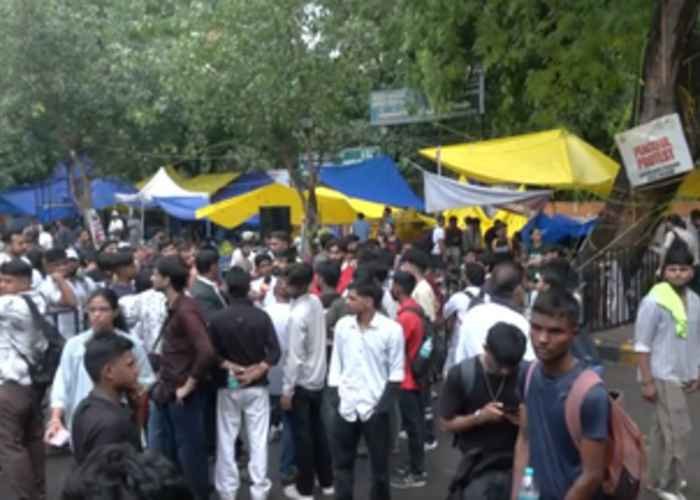
The Centre on Monday moved the Supreme Court seeking quashing of FIRs registered against student protesters who participated in demonstrations at Jantar Mantar and other parts of the country, urging the apex court to invoke its extraordinary powers under Article 142 of the Constitution to ensure “complete justice”.
Solicitor General Tushar Mehta mentioned the matter before a Bench headed by Chief Justice of India (CJI) Surya Kant and comprising Justices Joymalya Bagchi and V. Mohana, seeking an urgent hearing on the Centre’s application.
“I want to move one IA, if lordships can permit (listing) tomorrow. It is regarding that protest, for the purpose of FIRs to be quashed, etc. Article 142 (of the Constitution), we are invoking,” Mehta submitted.
After the Bench sought details, the Solicitor General clarified that the application concerned FIRs registered in connection with the nationwide student protests.
“If parties are reconciling, we have no problem,” the court observed.
When Mehta sought a hearing on Tuesday, the CJI-led Bench agreed to list the matter for hearing on September 1.
The Centre’s application seeks the exercise of the Supreme Court’s extraordinary powers under Article 142 to bring an end to criminal proceedings arising from the student protests.
The development comes ahead of a proposed September 5 protest march announced by the Cockroach Janta Party (CJP) from India Gate to the New Delhi Police Headquarters.
The CJP announced the march on August 24, alleging that the Centre had failed to honour commitments made to young people on July 25 following the withdrawal of nationwide youth protests.
The party said the September 5 march would be led by families of deceased NEET victims and alleged victims of police brutality, besides being joined by students and young citizens from across the country.
The CJP had also referred to Supreme Court proceedings on August 18 and alleged that the court had sought details of FIRs registered across the country to consider their collective quashing.
Earlier on Monday, the Supreme Court separately declined to pass an interim order against the proposed September 5 march. The court observed that there were no compelling circumstances at this stage to presume that the demonstration would result in a law-and-order problem.
The CJI-led Bench issued notice on an application challenging the proposed march but declined to hear it before September 5.
The application, filed by retired Delhi Police officer Rajendra Singh, raised apprehensions over the proposed demonstration and questioned whether the organisers had obtained the requisite permission, particularly in view of the upcoming BRICS Summit in the national capital.
The Supreme Court said it would presume, at this stage, that all concerned would act responsibly and participate in a peaceful and lawful manner, while observing that maintaining law and order remained the responsibility of the police authorities.
 FOLLOW NOW