New Delhi, August 23, 2026 (Yes Punjab News)
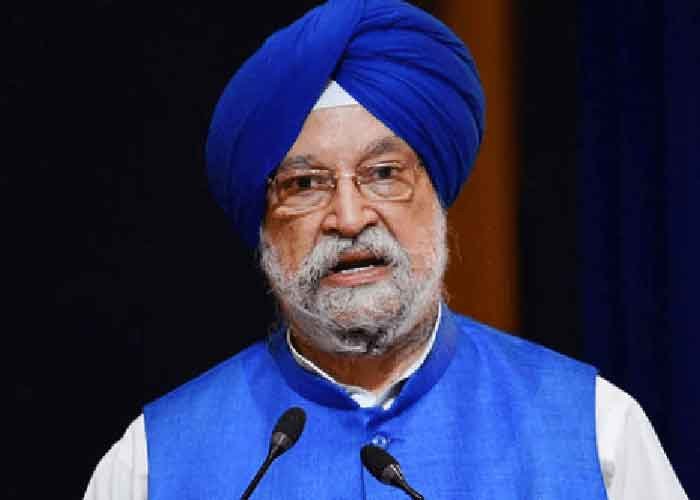
India’s space sector has reached significant milestones, with 100 launches and 548 satellites placed in orbit, including around 460 over the past decade, Petroleum and Natural Gas Minister Hardeep Singh Puri said on Sunday.
Marking National Space Day, Puri highlighted India’s progress in space exploration, from Chandrayaan-1 and Mangalyaan to Chandrayaan-3 and Aditya-L1.
“On National Space Day, we come together to celebrate the remarkable distance India has soared in the space sector,” Puri said, describing the country’s space programme as a reflection of its scientific capabilities, ambition and spirit of innovation.
He also credited India’s young talent and the growing space startup ecosystem with providing fresh momentum to the sector. According to Puri, private-sector innovators and startups are translating ambitious ideas into new opportunities for India’s space programme.
He said the country’s space capabilities would play an important role in building a technologically advanced and self-reliant India under Prime Minister Narendra Modi’s leadership.
National Space Day is observed on August 23 to commemorate the successful landing of Chandrayaan-3 on the Moon in 2023. The spacecraft touched down near the lunar south pole on August 23, 2023, making India the fourth country to achieve a soft landing on the Moon and the first to reach the lunar south polar region.
The first National Space Day was observed on August 23, 2024, with the occasion intended to celebrate both the Chandrayaan-3 achievement and India’s broader progress in space science and technology.
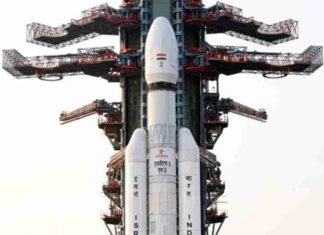
Chandrayaan-3 was launched aboard the LVM3-M4 from Sriharikota on July 14, 2023. The mission was designed to demonstrate three key capabilities — a safe and soft landing on the lunar surface, rover mobility and scientific experiments on the Moon.
Following the landing, the Pragyan rover rolled out of the Vikram lander and carried out experiments along with instruments on the lander. The mission studied parameters including lunar surface temperature, seismic activity, the plasma environment and elemental composition.
The lander and rover successfully completed their planned operations during one lunar day, equivalent to approximately 14 Earth days, fulfilling the mission’s primary objectives.
 FOLLOW NOW