
New Delhi, August 23, 2026 (Yes Punjab News)
With India heading towards a crucial electoral cycle beginning with Assembly polls in several states in 2027 and culminating in the 2029 Lok Sabha elections, political parties are increasingly shifting their focus from traditional campaigning to social media, digital narratives and the battle for online attention.
The stakes are high for both the Opposition and the ruling coalition. While the Opposition is seeking to challenge the BJP-led government, the ruling side is looking to demonstrate that its political strategy and governance record deserve another mandate.
But the nature of electoral competition is changing. Rallies, corner meetings, pamphlets, wall slogans and banners remain part of political mobilisation, but social media has emerged as another major battleground where parties seek to shape public opinion and influence voters.
India’s large digital population has made younger voters, particularly Gen Z and Gen Alpha, an important focus for political strategists. Gen Z, broadly comprising those born between 1997 and 2012, has grown up with smartphones and social media platforms and consumes a substantial amount of political and social content online.
For parties, the challenge is no longer merely to communicate their message but to ensure that it generates views, shares, comments and sustained discussion.
This competition is visible both between the ruling alliance and the Opposition and within the Opposition itself. Congress, Aam Aadmi Party, Samajwadi Party and other political formations are seeking to strengthen their digital presence and position themselves as the principal alternative to the BJP.
The younger generation has also become an attractive political constituency because many young voters have limited direct experience of governments that preceded the BJP’s long period in power at the Centre. Political parties therefore see digital platforms as a way to shape how this generation understands governance, politics and competing narratives.
The growing importance of social media is evident in the expansion of political media teams and the increasing use of influencers and digital personalities. The objective is to remain visible, generate conversations and, ultimately, convert online influence into electoral support.
The recent activities of the Cockroach Janata Party (CJP), a political outfit that has gained attention through social media-driven campaigns, provide one example of this emerging approach. Its Jantar Mantar protest and subsequent “School Thik Karo” campaign have generated considerable online attention.
The “School Thik Karo” campaign was launched on August 15 from Maharashtra’s Hingoli district to highlight deficiencies in government schools. The campaign has since expanded to other states, including Rajasthan.
The campaign has also triggered controversy. In Maharashtra, CJP founder Abhijeet Dipke’s visits to government schools have drawn attention to alleged infrastructure deficiencies, while in Rajasthan authorities introduced restrictions on outsiders entering school premises without permission.
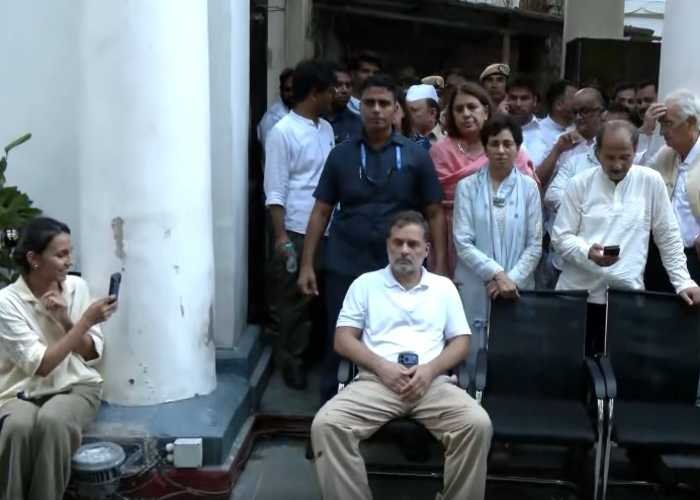
The Congress, too, has been seeking greater visibility around issues involving students and protests. Congress leader and Lok Sabha Leader of Opposition Rahul Gandhi’s recent protest outside a Delhi police station over the alleged pellet-gun injury to a student during a July 20 protest received extensive coverage across television and social media.
The battle for digital attention is therefore becoming an increasingly important component of political strategy. Parties are seeking to occupy what may be called the “viewing space” of voters — the limited attention available on phones, social media feeds and digital platforms.
Recent reports that the social media reach of Union ministers was discussed at a Cabinet meeting, with an emphasis on reaching wider audiences, particularly young people, further underline the importance political establishments are attaching to digital communication.
Yet, the growing focus on views and engagement also raises a larger question: whether political parties will use social media primarily to inform and engage voters or increasingly rely on sensationalism, confrontation and viral content to influence them.
The coming electoral cycle is likely to provide a clearer answer. With several Assembly elections due in 2027 and the Lok Sabha contest scheduled for 2029, political parties are already competing to shape narratives among younger voters.
For Gen Z and the emerging Gen Alpha electorate, the political battle may increasingly begin on a smartphone screen — long before it reaches the polling booth and, ultimately, the EVM button.
 FOLLOW NOW