


New Delhi, July 30, 2026 (Yes Punjab News)
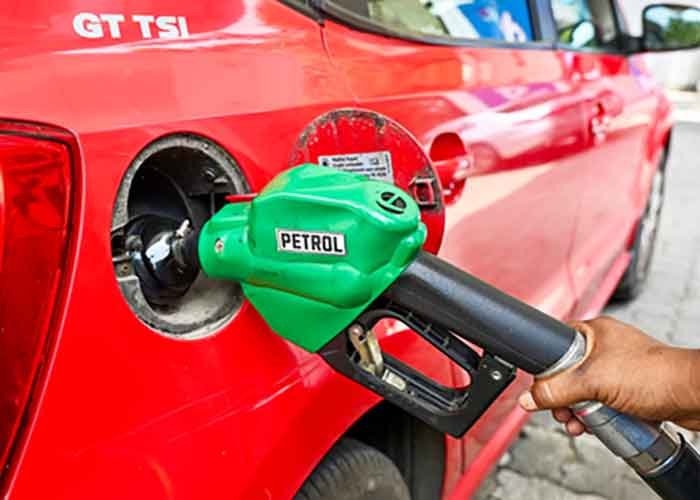
The Ministry of Petroleum and Natural Gas on Thursday dismissed claims circulating in sections of the media and on social media that petrol vehicles manufactured before 2023 are unsuitable for E20 fuel or that automobile manufacturers have privately expressed reservations about the ethanol-blending programme.
In a factsheet issued by the ministry, the government said E15-plus petrol has been in widespread use for more than three-and-a-half years, while E19-E20 fuel has been available for over two-and-a-half years without any verified evidence of widespread engine failures or vehicle breakdowns caused by ethanol blending.
The ministry said that if E20 fuel had resulted in systemic damage to engines or fuel systems, it would have led to large-scale warranty claims, service campaigns and consumer complaints. It added that no such trend has been reported.
Citing manufacturer service data, the ministry said a leading automobile manufacturer serviced 2.84 crore vehicles during the 2025-26 financial year, including around 1.5 crore vehicles that were not originally certified as E20-compatible, without detecting E20-related corrosion, abnormal wear or reduced component life. A leading two-wheeler manufacturer also reported similar field experience.
Rejecting claims that nearly 30 crore vehicles could become unusable due to E20 fuel, the ministry said more than 20 crore two-wheelers and over three crore petrol cars have already been operating on E15-plus and E20 fuel blends without verified evidence of widespread mechanical issues.
The ministry also refuted suggestions that automobile manufacturers oppose the E20 programme. It referred to a joint press conference held on July 4 by the Ministries of Petroleum and Natural Gas, Heavy Industries, and Road Transport and Highways, where senior representatives of Toyota Kirloskar, Maruti Suzuki, Hero MotoCorp, Hyundai Motor India, TVS Motor Company and Bajaj Auto expressed support for the programme.
According to the ministry, Toyota Kirloskar said E20 was introduced only after extensive testing on older vehicles and described ethanol as a proven, clean fuel used internationally for decades. Maruti Suzuki stated that service records from 2.84 crore vehicles showed no adverse impact linked to E20, while Hero MotoCorp said its data revealed no higher incidence of damage in vehicles using ethanol-blended fuel. Hyundai, TVS Motor Company and Bajaj Auto also reaffirmed confidence in the programme.
The factsheet further rejected claims of a significant drop in fuel efficiency. It said fuel economy depends on several factors, including driving habits, traffic conditions, vehicle maintenance, tyre pressure and air-conditioner usage. For older vehicles originally designed for E10 fuel, any reduction in mileage is generally limited to around 3-5 per cent.
The ministry also highlighted the performance advantages of E20 fuel, stating that it offers a higher octane rating, improved anti-knock properties, cleaner combustion, smoother engine operation and better acceleration. It added that ethanol has been used globally for over a century, with countries such as Brazil successfully operating vehicles on higher ethanol blends for decades.
 FOLLOW NOW