



New Delhi, July 30, 2026 (Yes Punjab News)
The Central Government has strengthened legal safeguards and regulatory measures to counter the misuse of AI-generated deepfakes, while expanding public awareness on cyber security through nationwide outreach programmes.
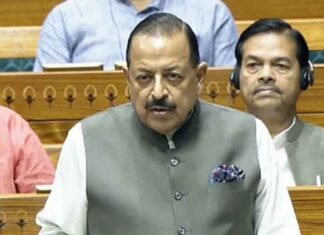
Minister of State for Electronics and Information Technology Jitin Prasada informed the Lok Sabha on Thursday that the government has approved 13 responsible Artificial Intelligence (AI) projects focused on deepfake detection. He said 6,650 cyber security awareness workshops have also been conducted across the country, reaching more than 11.37 lakh participants.
The workshops, organised under the Information Security Education and Awareness (ISEA) project, are aimed at promoting cyber hygiene and building awareness on information security. Participants have included school and college students, teachers, law enforcement personnel, government officials and members of the general public.
Prasada said the Safe & Trusted AI pillar of the IndiaAI Mission is promoting the responsible development, deployment and adoption of AI through indigenous governance frameworks, standards, evaluation mechanisms and related tools.
Among the major initiatives is Saakshya, a multi-agent deepfake detection framework developed jointly by IIT Jodhpur and IIT Madras. Other projects include AI Vishleshak, designed to improve audio-visual forgery detection, and IIT Kharagpur’s Real-Time Voice Deepfake Detection System.
The government is also disseminating multilingual awareness material, including handbooks, posters, brochures, short videos and cartoon stories, through print, electronic and social media platforms. In addition, CERT-In regularly issues advisories, guidelines and awareness material on AI-related threats, including deepfakes.
Prasada further said the Information Technology (Intermediary Guidelines and Digital Media Ethics Code) Rules, 2021 were amended in February 2026 to address harms arising from synthetically generated information, including deepfakes and other AI-generated content. The revised rules require intermediaries to ensure clear labelling and traceable metadata for permissible AI-generated content to help users identify synthetic material and prevent deception or misuse.
 FOLLOW NOW