


New Delhi, August 4, 2026 (Yes Punjab News)
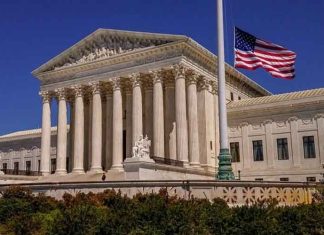
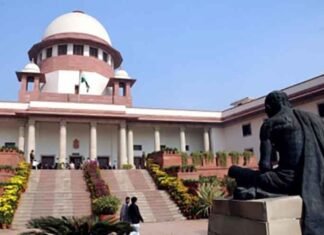
The Supreme Court has upheld the acquittal of 20 persons in a 2014 murder case arising from a Holi-day clash in Maharashtra’s Washim district, refusing to interfere with the Bombay High Court’s judgment that extended the benefit of doubt to the accused.
A Bench comprising Justices Sanjay Karol and A.G. Masih dismissed separate appeals filed by the victim’s mother and the Maharashtra government against the Bombay High Court’s 2022 verdict, which had overturned the trial court’s conviction and life sentences awarded to the accused.
The case relates to the murder of Avinash Chavhan and the attempted murder of three others during a clash on March 18, 2014, following an earlier dispute over playing DJ music during Holi celebrations. While the trial court had convicted all 20 accused and sentenced them to life imprisonment, the High Court later acquitted them after re-evaluating the evidence, holding that the prosecution had failed to establish its case beyond reasonable doubt.
Affirming the High Court’s findings, the Supreme Court observed that the acquittal represented a “reasonable and possible view” based on the evidence available. The Bench noted significant inconsistencies between eyewitness accounts and medical evidence, along with striking similarities in the testimonies of six prosecution witnesses.
The court observed that identical and stereotyped witness statements could reasonably raise doubts about whether the witnesses were recounting actual events or repeating tutored versions. It endorsed the High Court’s finding that the medical evidence did not support the prosecution’s claim that four accused repeatedly struck the deceased’s head with iron pipes.
The judgment further noted that the High Court had considered several other shortcomings in the prosecution’s case, including the absence of independent witnesses despite the incident occurring in a residential locality, unexplained delays in recording eyewitness statements, discrepancies in the First Information Report (FIR), lapses in handling case property, and the prosecution’s failure to explain injuries sustained by some of the accused.
Reiterating the legal principles governing appeals against acquittal, the apex court said such judgments can be reversed only if they are shown to be perverse or based on a complete misreading of evidence. It held that the High Court’s conclusions were reasoned and supported by the record, even if some aspects of its reasoning were not entirely free from imperfections.
Declining to restore the convictions and sentences imposed by the trial court, the Supreme Court dismissed both appeals, holding that the threshold for interference under Article 136 of the Constitution had not been met.
 FOLLOW NOW