

New Delhi, August 4, 2026 (Yes Punjab News)
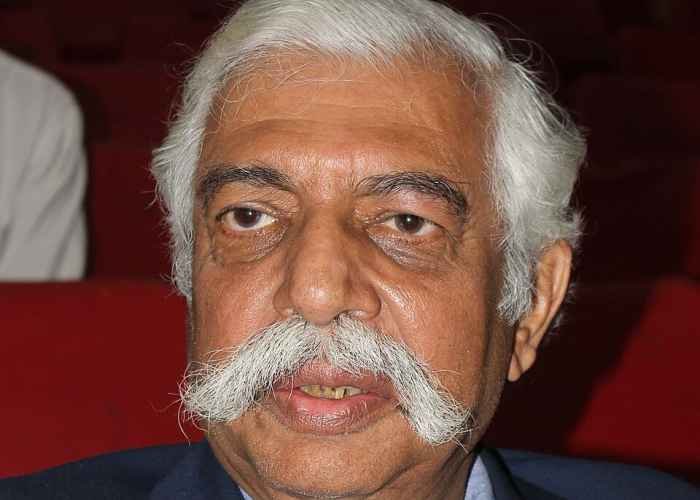
Pakistan’s alleged strategy behind recent terror attacks in Jammu and Kashmir was aimed at triggering communal tensions across India, but the attempt failed because people recognised the intent and maintained peace, retired Major General G.D. Bakshi has said.
In an exclusive interview with IANS, the former Army officer alleged that the Pahalgam terror attack was carried out under a strategy approved by Pakistan’s military leadership to provoke religious violence by selectively targeting victims based on their faith. According to him, the objective was to incite retaliatory attacks against Kashmiris and Muslims, disrupt communal harmony, and damage Jammu and Kashmir’s tourism-dependent economy.
Bakshi said the plan did not succeed because both the people of India and residents of Jammu and Kashmir understood the alleged motive behind the attacks and did not allow communal tensions to escalate.
The retired officer also cautioned Pakistan against interpreting Operation Sindoor as India’s final military response. He asserted that any fresh terrorist attacks would invite a stronger retaliation, including action across the Line of Control and the International Border, while describing Operation Sindoor as only a “trailer” of India’s capabilities.
On the issue of India-Pakistan engagement, Bakshi reiterated that dialogue cannot take place alongside terrorism. Referring to India’s suspension of the Indus Waters Treaty (IWT), he said the government’s position that “blood and water cannot flow together” remained justified in view of continued cross-border terrorism.
He argued that the Indus Waters Treaty, signed in 1956 under Prime Minister Jawaharlal Nehru, was based on the expectation of peaceful bilateral relations. According to Bakshi, repeated conflicts, including the wars of 1965 and 1971, the Kargil conflict, and decades of cross-border terrorism, had undermined the assumptions on which the agreement was negotiated.
Calling for a renegotiation of the treaty, Bakshi said India would not accept third-party mediation by institutions such as the World Bank or countries like the United States. He maintained that any future discussions on the treaty should take place directly between India and Pakistan.
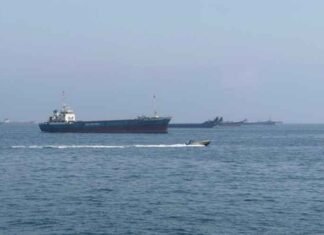
The former Army officer also criticised Pakistan’s management of its own water infrastructure, questioning why it had failed to desilt its barrages and prevent water from flowing into the sea while blaming India for water-related issues.
Rejecting international involvement in India-Pakistan disputes, Bakshi described the issues as strictly bilateral. He further criticised what he termed double standards in international discourse on river-water sharing, citing the United States’ approach towards Mexico as an example.
Bakshi also opposed renewed talks with Pakistan while cross-border terrorism continues and criticised Indian political leaders advocating dialogue under the present circumstances. Reiterating India’s position on Jammu and Kashmir, he asserted that the entire former princely state, including Pakistan-occupied Kashmir and Gilgit-Baltistan, legally belongs to India following Maharaja Hari Singh’s accession.
 FOLLOW NOW