
New Delhi, August 18, 2026 (Yes Punjab News)
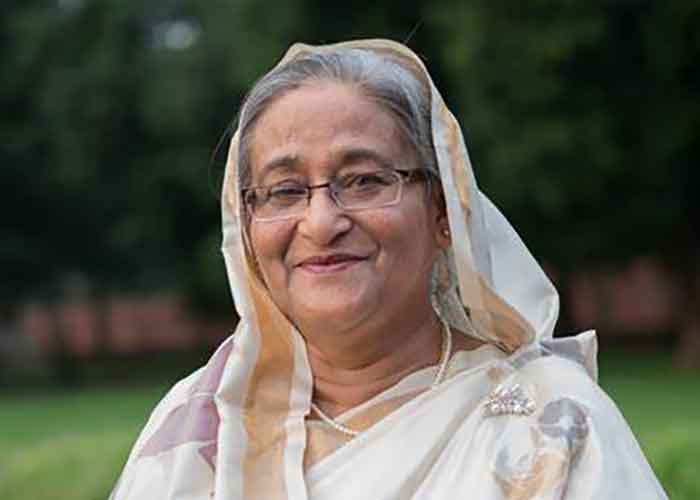
Bangladesh’s decision to reconsider Prime Minister Tarique Rahman’s proposed visit to India, while linking the issue to Dhaka’s demand for the extradition of former Prime Minister Sheikh Hasina, has come at a politically sensitive juncture. Hasina herself announced this month that she intended to return to Bangladesh in December.
The timing is significant because Dhaka’s official statement focused on its extradition demand and criticised an online press conference addressed by Hasina, but did not specifically engage with her announcement about returning home.
A day before Bangladesh’s Ministry of Foreign Affairs (MOFA) ruled out Rahman’s India visit, M. Humayun Kabir, President of the Bangladesh Enterprise Institute and a former ambassador to the United States, argued in The Daily Star that Bangladesh-India ties had reached a stage where the relationship needed to be reassessed from a “new perspective”.
Kabir acknowledged India’s renewed interest in Bangladesh, citing the two countries’ geographical, historical and mutual interdependence, but said Dhaka should not depend excessively on any one partner for political or domestic reasons and should instead engage with countries according to its own interests.
The argument comes as the Bangladesh Nationalist Party (BNP)-led government completes six months in office amid domestic criticism over governance and economic challenges. Analysts cited in local media have raised concerns about law and order, energy supplies and the gap between the government’s people-centric image and the conduct of some party colleagues.
The government is also facing pressure from an Opposition alliance led by Bangladesh Jamaat-e-Islami, which has criticised its outreach to Pakistan at the perceived cost of relations with India.
Jamaat, which opposed Bangladesh’s independence in 1971 and was banned during Hasina’s tenure, saw the ban lifted under the Muhammad Yunus-led interim government. It is now the principal Opposition force in Parliament and has been demanding implementation of the July Charter, which continues to face legal and constitutional challenges.
Economic pressures add another layer to Dhaka’s political calculations. The World Bank’s Bangladesh Development Update has projected growth to slow to 3.9 per cent in FY26, while warning that a prolonged Middle East conflict could fuel inflation, increase energy subsidies, weaken the current account and raise import costs while affecting exports and remittances.
Economist Fahmida Khatun has also highlighted inflation, revenue mobilisation and the energy crisis as major challenges, observing that the economy had yet to show a promising performance after six months of the BNP government.
Against this backdrop, Hasina’s proposed return could present another major source of uncertainty. Her arrival could heighten tensions between the government and the Awami League, which has been barred from political activity. Her arrest could trigger unrest and international criticism, while any accommodation with her could be viewed as a sign of political weakness.
Hasina has said she plans to return in December, Bangladesh’s “Victory Month”, when the country commemorates its liberation in the 1971 war. She has acknowledged that imprisonment or even death could await her, portraying her proposed return as a willingness to face personal risks for what she describes as Bangladesh’s democratic future.
The extradition issue also has a legal dimension. India and Bangladesh signed an extradition treaty in 2013, which was amended in 2016. Article 6 provides for refusal of extradition in cases involving political offences, while excluding certain serious crimes, including murder, manslaughter, grievous assault, possession of explosives or firearms intended to endanger life and violations covered by multilateral treaty obligations.
India has indicated that the matter would have to be examined in accordance with the applicable legal and judicial processes before any decision is taken on handing over Hasina, who is facing a death sentence in Bangladesh.
The issue also carries a deeply personal historical dimension for Hasina. She and her sister, Rehana, were abroad when Sheikh Mujibur Rahman, regarded as the founding father of Bangladesh, was assassinated in 1975 along with his wife Begum Fazilatunnesa, sons Sheikh Kamal and Sheikh Jamal, and 10-year-old son Sheikh Russel. Several other members of the family were also killed in coordinated attacks across Dhaka.
For Bangladesh, Hasina’s possible return therefore combines political, legal and economic risks. For India, any response will involve balancing bilateral relations with treaty provisions and judicial considerations.
For now, a cautious wait-and-watch approach appears to be the most pragmatic course.
 FOLLOW NOW