

New Delhi, August 4, 2026 (Yes Punjab News)
The Centre has informed the Supreme Court that an expert committee headed by the Director General of Health Services (DGHS) has been constituted to examine issues related to the NEET-PG 2025-26 admission system, including the decision to reduce qualifying cut-off percentiles for postgraduate medical admissions.
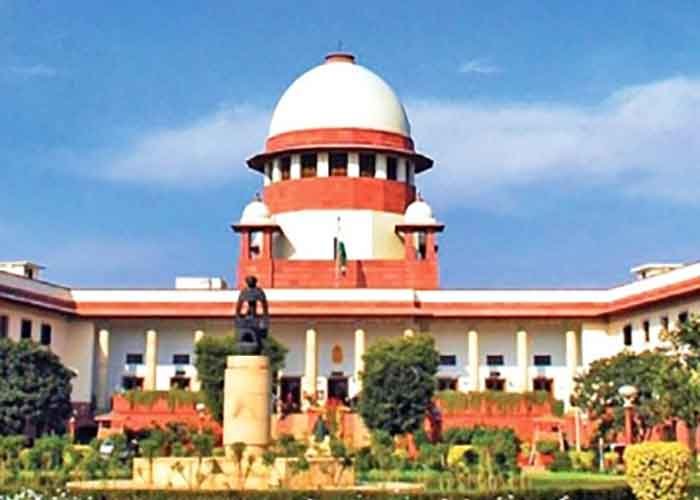
A bench of Justices P.S. Narasimha and Alok Aradhe was hearing a public interest litigation (PIL) challenging the government’s decision to significantly lower the qualifying cut-off percentiles after the declaration of results and completion of two rounds of counselling.
Appearing for the Union government, Additional Solicitor General (ASG) Aishwarya Bhati informed the court that the expert committee was set up in compliance with earlier directions of the apex court and sought eight weeks’ time to complete the review and submit its report.
“We have set up a committee as per your lordships’ directions. We will do the exercise and submit a report,” ASG Bhati told the bench.
The court was informed that the committee would be chaired by DGHS Dr Loveneesh G. Krishna and would include 11 other members representing key medical and government institutions.
Taking note of the DGHS office order dated July 23 regarding the constitution of the panel, the Supreme Court directed the committee to invite suggestions from stakeholders and submit its report after detailed consideration within eight weeks.
The expert panel has been tasked with conducting a comprehensive audit of the existing NEET-based postgraduate medical admission system, identifying gaps and shortcomings, and recommending practical solutions.
The committee includes senior officials from the Directorate General of Health Services, National Board of Examinations (NBE), National Medical Commission (NMC), National Testing Agency (NTA), Union Health Ministry and National Informatics Centre (NIC).
The PIL, filed by advocate Satyam Singh Rajput, challenged the decision to lower the NEET-PG qualifying standards to extremely low levels, including zero or negative percentiles, arguing that such a move was arbitrary and violated Articles 14 and 21 of the Constitution.
The petition contended that allowing candidates with very low scores to enter postgraduate medical training could affect patient safety, public health and the quality of medical education. It also argued that selection criteria cannot be changed after the admission process has already begun.
The Centre, however, defended the decision, stating that the reduction in cut-off percentiles was made after consideration by expert bodies due to a large number of vacant postgraduate medical seats and the need for better utilisation of healthcare resources.
In its affidavit before the court, the Union Ministry of Health and Family Welfare said nearly 20,000 postgraduate medical seats were expected to remain vacant nationwide, leading to a review of the qualifying cut-off.
The ministry said the revised criteria allowed more than one lakh additional candidates to become eligible for the third round of counselling without affecting the existing merit order. It also pointed out that a similar reduction to zero percentile had been implemented in 2023.
The National Board of Examinations in Medical Sciences (NBEMS), in a separate affidavit, clarified that it had no role in deciding the reduction of qualifying percentiles and stated that the revised cut-off made 95,913 additional candidates eligible for counselling.
The Supreme Court has listed the matter for further hearing after eight weeks following submission of the committee report.
 FOLLOW NOW