
New Delhi, August 21, 2026 (Yes Punjab News)
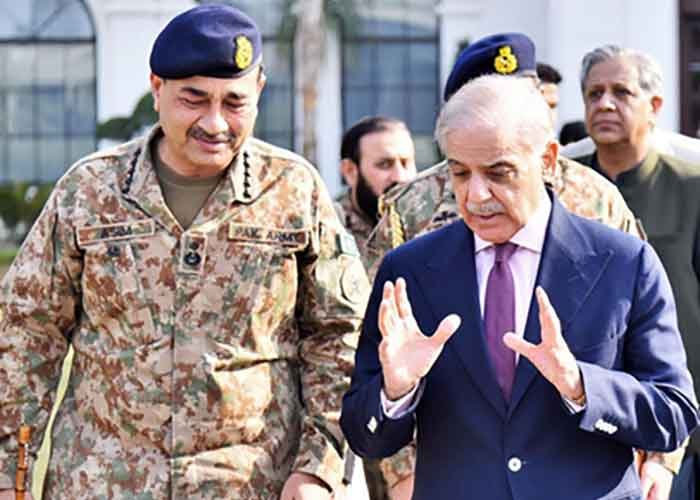
Pakistan Army chief Field Marshal Asim Munir is emerging as the country’s most powerful figure as Parliament moves to further consolidate military authority over the armed forces and strategic decision-making, according to reports.
The latest legislation, approved by the National Assembly, is aimed at creating a centralised command structure covering Pakistan’s army, navy and air force. The proposed framework would significantly expand the authority of the army chief, who could exercise control over senior appointments, retirements, extensions and other personnel decisions across the three services.
The measures follow the 27th Constitutional Amendment passed by Pakistan’s Parliament last year, which expanded the powers and legal standing of the military leadership. The bills still require approval by the Senate and presidential assent before becoming law.
Munir, a former Director-General of Pakistan’s Inter-Services Intelligence (ISI), became army chief and was elevated to the rank of Field Marshal in May 2025. He was only the second Pakistani military officer after Ayub Khan to receive the rank and the first Field Marshal to simultaneously serve as Chief of Army Staff.
The proposed changes would also give Munir a central role in advising the Prime Minister on national security, defence and matters concerning the armed forces, besides providing him significant influence over nuclear and strategic command appointments.
His growing influence extends beyond defence. Munir has increasingly appeared in Pakistan’s diplomatic engagements, meeting US President Donald Trump and Chinese President Xi Jinping and taking part in regional diplomatic and security initiatives. Such engagements are traditionally handled primarily by civilian leaders and foreign ministers.
At home, Munir has also become a central figure in Pakistan’s political landscape amid the continuing imprisonment of former Prime Minister Imran Khan. Their relationship reportedly dates back to 2019, when Munir, then a lieutenant general and ISI chief, was removed from the intelligence post during Khan’s tenure as prime minister.
Munir’s expanding authority has drawn comparisons with Pakistan’s previous military rulers — Ayub Khan, Zia-ul-Haq and Pervez Musharraf — who came to power through military coups in 1958, 1977 and 1999 respectively. Unlike those takeovers, however, Munir’s increasing powers are being formalised through legislation and constitutional mechanisms rather than an outright military coup.
Pakistan is again grappling with political divisions, economic pressures and a weak civilian political structure. Against this backdrop, the military’s expanding institutional role has fuelled speculation that the country could be moving towards a system in which civilian leaders retain formal office while the military exercises decisive authority.
Whether Munir eventually assumes a formal executive position remains uncertain. For now, however, the proposed legal changes and his expanding diplomatic and strategic role have placed him at the centre of Pakistan’s political and security establishment.
 FOLLOW NOW