

Chandigarh, August 4, 2026 (Yes Punjab News)
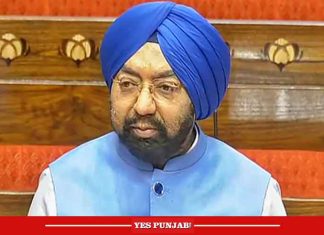
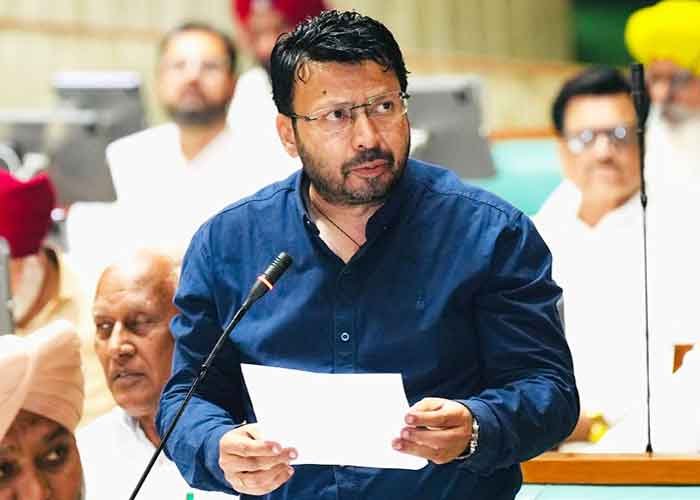
Punjab Cabinet Minister Dr. Ravjot Singh on Tuesday supported the resolution on E20 ethanol-blended petrol passed by the Punjab Legislative Assembly, stating that the state government is not opposed to ethanol blending but wants a phased implementation with adequate consumer safeguards and fuel choices.
Participating in the Assembly discussion on the resolution, Dr. Ravjot Singh said the National Biofuel Policy of the Government of India envisaged increasing ethanol blending up to 20 per cent by 2030. However, he expressed concern over the accelerated implementation of E20, saying such a major transition required proper preparation, technical compatibility and protection of consumer interests.
The minister highlighted technical concerns related to ethanol-blended fuel, stating that ethanol has a lower calorific value than conventional petrol, which can result in reduced fuel efficiency and higher consumption to achieve similar performance.
He also pointed out that ethanol is hygroscopic, meaning it absorbs moisture from the atmosphere, and said this could potentially affect engines, fuel tanks, fuel lines and rubber components, particularly in vehicles that remain unused for longer durations.
Dr. Ravjot Singh informed the House that nearly 300 million vehicles manufactured before April 2023, including around 220 million two-wheelers and 80 million four-wheelers, were not designed for E20 compatibility.
He said the Centre should clearly address concerns regarding possible damage to such vehicles and establish accountability if consumers suffer financial losses due to fuel compatibility issues.
The minister also raised environmental concerns linked to ethanol production, stating that manufacturing ethanol from crops such as sugarcane, paddy and maize requires significant water resources. He stressed that the impact of large-scale ethanol production on agriculture, groundwater and environmental sustainability must be assessed carefully.
Dr. Ravjot Singh said that while oil marketing companies, ethanol producers and the government may benefit from the policy framework, ordinary consumers could face higher operating costs due to reduced mileage, increased fuel consumption and possible maintenance expenses.
He clarified that Punjab’s demand was not against E20 fuel but for consumer choice and a gradual transition.
The minister urged the Centre to continue supplying conventional E10 petrol alongside E20 fuel, allowing consumers to choose fuel according to their vehicle specifications. He said several countries provide consumers with multiple fuel options based on vehicle compatibility.
He also demanded that E20 petrol should be priced lower than conventional petrol to compensate for its comparatively lower energy efficiency and prevent additional financial pressure on consumers.
Concluding his remarks, Dr. Ravjot Singh urged that the resolution passed by the Punjab Legislative Assembly be forwarded to the Government of India for a comprehensive review of the E20 policy.
He also appreciated Punjab Finance Minister S. Harpal Singh Cheema for initiating the discussion on an issue that affects millions of vehicle owners and carries wider economic, environmental and consumer implications.
 FOLLOW NOW