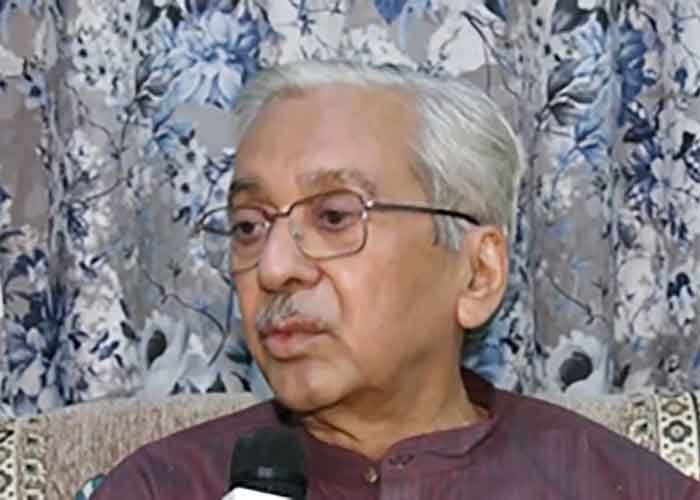
New Delhi, August 20, 2026 (Yes Punjab News)
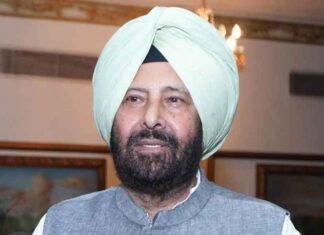
Former NCERT Director J.S. Rajput has defended the inclusion of members with reported RSS links in a panel associated with the preparation of a new Political Science textbook, calling the criticism an “absurd protest” and arguing that ideological association should not be used to judge an academic’s credentials.
Speaking to IANS, Rajput said an individual’s association with the RSS did not necessarily mean that the person was ideologically bound by its strategies or perceptions.
“An academic is an academic, and an honest academic is one who undertakes his academic work with all sincerity. In any case, why should people be so upset about some people associated with RSS being included?” he said.
Drawing a comparison with earlier periods, Rajput said ideological affiliations had not always prompted similar objections in textbook preparation.
“Earlier, communists used to write NCERT textbooks. Did they protest at that time? This is an absurd protest and has no relevance,” he said, adding that NCERT’s large academic staff was responsible for determining the final content of its textbooks.
Rajput said outside experts could provide inputs during the drafting process, but the final responsibility rested with NCERT’s faculty and academic experts. “Outsiders may give inputs, but it is for the faculty and academicians to decide what will finally go into the books,” he said.
He also rejected suggestions that NCERT had lost public trust because curriculum changes were increasingly being viewed through a political lens. Rajput acknowledged that the institution had faced controversies but said it continued to enjoy considerable public acceptance, citing the respect he receives from people, including serving IAS officers, because of his association with NCERT.
Recalling a controversy during his tenure, Rajput said he had recommended that children be taught the basics of all religions, along with their commonalities and the need to respect differences. He said the matter later reached the Supreme Court, which, according to him, endorsed the underlying objective even more strongly as a means of strengthening secularism.
Examination Systems and the Role of Values
Rajput also spoke about reported anomalies involving the National Testing Agency (NTA), saying examination bodies needed to identify competent and responsible people for critical assignments.
Referring to educationist D.S. Kothari, Rajput recalled his formulation that India needed “S, T and P” — science, technology and production. He said Kothari later added “G” for goodness after becoming concerned about declining moral values, with Gandhi representing the values of the freedom struggle.
Rajput argued that institutional reforms alone could not prevent failures unless officials and other personnel were committed to their responsibilities. Preparing question papers, he said, required substantial mental effort and responsibility.
How NCERT Textbooks Are Scrutinised
On whether internal scrutiny of textbook drafts should be made public, Rajput said there was no such requirement. He explained that chapters are prepared with the involvement of invited experts and reviewed through multiple levels, including coordination by NCERT’s internal faculty, before being finalised.
Asked how NCERT could prevent any particular political ideology from dominating school textbooks, Rajput said the focus should be on selecting competent academicians committed to their disciplines and to the education of young Indians.
A professor of physics, Rajput said he had studied textbook practices in several countries during his tenure. He noted that historical narratives can differ between countries, citing China and Japan as an example, and argued that NCERT should seek academics who are professionally competent and committed to their field and students.
He also acknowledged that efforts to correct historical omissions or distortions could themselves create new gaps if authors were excessively constrained by ideology. Rajput said historical writing needed to incorporate subsequent research, excavations, technological advances and newly established facts.
He recalled approaching two eminent historians around 2000 and telling them that their history books, written decades earlier, needed to take into account research and discoveries that had emerged since their publication.
Rajput said the central challenge was to ensure that academics involved in textbook preparation remained committed to scholarship and capable of incorporating new evidence rather than allowing ideological constraints to shape the educational material.
 FOLLOW NOW