
New Delhi, September 4, 2026 (Yes Punjab News)
US-based defence company Powerus, which reportedly has close ties to the family of US President Donald Trump, has drawn attention after signing a memorandum of understanding (MoU) with the Pakistan Army, offering Islamabad access to Ukrainian drone technology. The proposed collaboration has raised concerns over potential implications for regional security, according to a report published by India Narrative.
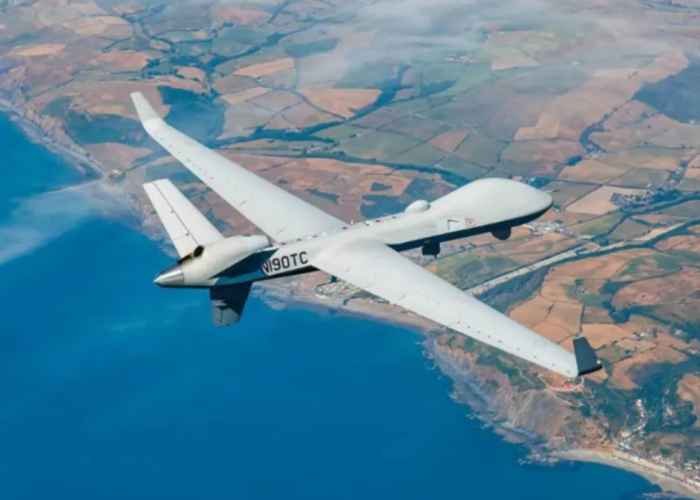
Established in October last year, Powerus acquired three small firms within six months of its formation and began manufacturing unmanned aerial and maritime systems. The company also signed an agreement with G1 Exploration to commercialise autonomous defence technologies developed in Ukraine.
G1 Exploration holds the intellectual property rights to seven fully developed drone models from Ukrainian manufacturers, along with several other systems at different stages of development. The partnership has also led to the launch of the Guardian line of drone interceptors, the report stated.
Powerus has reportedly secured several defence contracts, competing with major industry players such as Lockheed Martin, General Dynamics and Boeing. These include a $90 million contract with the US Air Force for 3,000 interceptor drones and a $2.5 million deal with the US Department of Defense for 1,500 first-person-view (FPV) drones, control kits and spare parts. It has also secured a $22.3 million contract to develop a system to protect critical oil and gas infrastructure in the Middle East on behalf of the United States.
The company has also pursued partnerships in the Indian subcontinent. It previously signed an agreement with Mumbai-based Paras Defence and Space Technologies for the production and sale of Guardian-1 technology in India.
According to the report, Powerus subsequently signed an MoU with the Pakistan Army, represented by Field Marshal Asim Munir, on September 16. The proposed deal has prompted concerns over potential conflicts of interest and the implications of expanding Pakistan’s drone capabilities, particularly in the aftermath of Operation Sindoor.
Although the exact terms of the agreement have not been disclosed, Powerus co-founder Brett Velicovich said the MoU envisages an initial order of unmanned aerial vehicles, with a longer-term objective of establishing a joint technology partnership and manufacturing facilities in Pakistan. CEO Andrew Fox described Pakistan’s private defence sector as being at an early stage of development but said it holds interest for American companies.
The report also raised concerns about the potential expansion of US-Pakistan defence cooperation. While Washington has reportedly limited its military support to modernisation packages for previously supplied F-16 fighter jets, the proposed Powerus partnership has renewed questions about the future direction of defence ties between the two countries.
 FOLLOW NOW