
New Delhi, July 31, 2026 (Yes Punjab News)
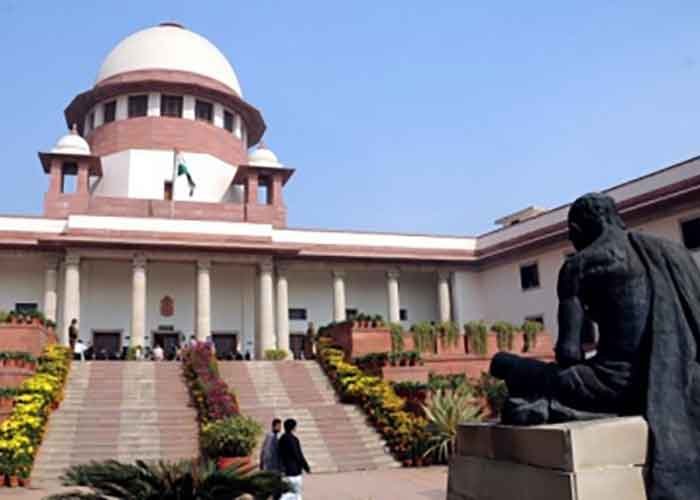
The Supreme Court has ruled that a married daughter cannot be excluded from consideration for compassionate appointment merely because a state policy permits such appointments only for divorced or deserted daughters.
A Bench of Justices M.M. Sundresh and Prasanna B. Varale held that such a classification is unconstitutional and violates the principle of equality guaranteed under Article 14 of the Constitution.
The ruling came while allowing an appeal filed by Sayara Khatoon and her daughter against a Patna High Court order that had upheld the rejection of the daughter’s claim for compassionate appointment following the death of her father.
The dispute arose from a Bihar government policy issued on December 10, 2014, which restricted eligibility for compassionate appointment among daughters to those who were divorced or deserted. The appellants had challenged this condition before the Supreme Court.
The state authorities had also rejected the claim on the ground that the deceased employee’s brother had objected to the appointment. However, the Supreme Court noted that the brother had earlier submitted a no-objection certificate, and therefore, the objection could not be treated as a valid ground for rejection.
While examining the policy, the Bench observed that there cannot be any legal distinction between sons and daughters in matters of compassionate appointment. The court said that any classification that treats daughters differently from sons is constitutionally impermissible.
The Supreme Court rejected the assumption that a daughter loses her connection with her parental family after marriage. It observed that there cannot be a presumption that a married daughter severs all ties with her parents and becomes solely dependent on her matrimonial family.
The court also noted that the appellant had stated that she was living with her parental family and receiving support from her mother and brother, despite her divorce not being formally recognised in law.
Holding that a technical interpretation cannot be used to deny a legitimate claim, the Supreme Court set aside the Patna High Court order and the rejection of the appointment request.
The Bihar government has been directed to reconsider the appellant’s case on merits within eight weeks from receiving a copy of the court order.
 FOLLOW NOW