

Chandigarh, October 3, 2026 (Yes Punjab News)
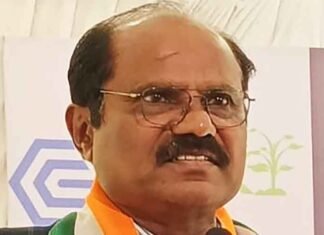
Addressing Chief Election Commissioner Gyanesh Kumar personally on the occasion of Gandhi Jayanti, former Special Chief Secretary, Government of Punjab, KBS Sidhu said that a fresh Election Commission of India (ECI) circular ordering a nationwide “special drive” to trace voters missing from the post-SIR rolls amounts to a quiet institutional admission that the Special Intensive Revision (SIR) wrongly dropped lakhs of eligible electors.
KBS Sidhu, Founder-Editor of The KBS Chronicle, noted that the circular — Letter No. 23/2025/ERS(Vol-II), dated October 1, 2026, and signed by Under Secretary Sandeep Kumar — directs Booth Level Officers (BLOs) across the country to compare the pre-SIR electoral rolls against the rolls as they now stand, conduct house-to-house visits — 20 to 25 homes a week for about a month — to trace missing electors, file Form 6 on their behalf, share the lists with Booth Level Agents twice, and hold Booth Level Camps covering the homeless and other marginalised groups.
In a series of columns on The KBS Chronicle through 2025 and 2026 — among them “Voters: Don’t Wait for the BLO to Knock Twice,””SIR Process Creates a Stir,” and “SIR — Senseless Impairment of Rolls” — KBS Sidhu had repeatedly flagged exactly this risk: that electors with every right to vote were being dropped from the rolls through SIR’s matching and verification process, with no adequate mechanism to catch and correct the errors before the rolls were finalised.
The October 1 circular does not describe itself as a correction of SIR’s errors. It is framed as routine housekeeping — a “special drive” to update the rolls after SIR’s completion. In a new column published on The KBS Chronicle on October 2, 2026, titled “Mr Gyanesh Kumar, I Told You So… But You Marked It as SPAM,” KBS Sidhu argues that the substance tells a different story: an Election Commission quietly doing, under administrative cover, what its Commissioners and officials had declined to acknowledge in response to his repeated public warnings — more than 37 lakh deleted names among them.
The column argues the special drive leaves three gaps unaddressed: no fix for the legacy data-linkage problem behind the deletions, no audit of the matching algorithm that caused them, and a timeline tight enough to collide with the 2027 round of state elections, Punjab’s among them.
The piece situates the episode within a wider constitutional argument. Article 324 of the Constitution, KBS Sidhu writes, vests the Election Commission with plenary power over the conduct of elections — but not with a monopoly on wisdom, still less a licence for institutional arrogance. He draws on the Supreme Court’s reasoning in Association for Democratic Reforms v. Election Commission of India (May 27, 2026) and the Constitution Bench’s earlier ruling in T.N. Seshan, Chief Election Commissioner of India v. Union of India (1995), both affirming the Commission’s multi-member character, by design, against any single Commissioner’s unchecked judgment.
“Article 324 gives the Election Commission plenary power over India’s elections. It does not give it a monopoly on wisdom, or a licence for institutional arrogance,” said KBS Sidhu. “For more than a year, every warning I raised about the Special Intensive Revision went unanswered. This circular is the Commission doing quietly what it would not acknowledge publicly — which is really just another way of marking the warning as spam, and acting on it anyway.”
KBS Sidhu also addressed citizens directly, offering practical guidance ahead of the special drive. Once a name has featured on the previous electoral roll, he said, the onus now lies on the Electoral Registration Officer (ERO) to justify its deletion from the roll under preparation — not on the citizen to prove continued eligibility; voters would still do well to keep their identity and address documents ready. For first-time voters becoming eligible on turning 18, it helps if a parent is registered as a voter at the same address; where a parent is registered elsewhere, the first-time voter should mention that address in the application.
“Article 326 of the Constitution guarantees universal adult suffrage,” said KBS Sidhu. “Any citizen of India over 18 years of age, ordinarily resident at an address, cannot be excluded from the electoral roll merely on account of a hypothetical, or even illogical, mapping criterion.”
The full column, “Mr Gyanesh Kumar, I Told You So… But You Marked It as SPAM,” is available on The KBS Chronicle at https://kbssidhu.substack.com/
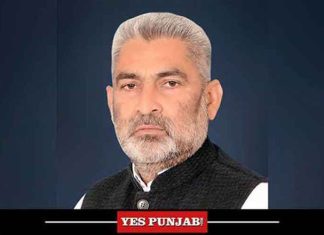
KBS Sidhu is a retired IAS officer of the 1984 batch, Punjab cadre, who superannuated in July 2021 as Special Chief Secretary, Government of Punjab. He is the Founder-Editor of The KBS Chronicle and has served as an election observer of the Election Commission of India across three Lok Sabha elections.
For further comment: KBS Sidhu, kbs.sidhu@gmail.com, 7837-001-001.
 FOLLOW NOW