
Washington, October 8, 2026 (Yes Punjab News)
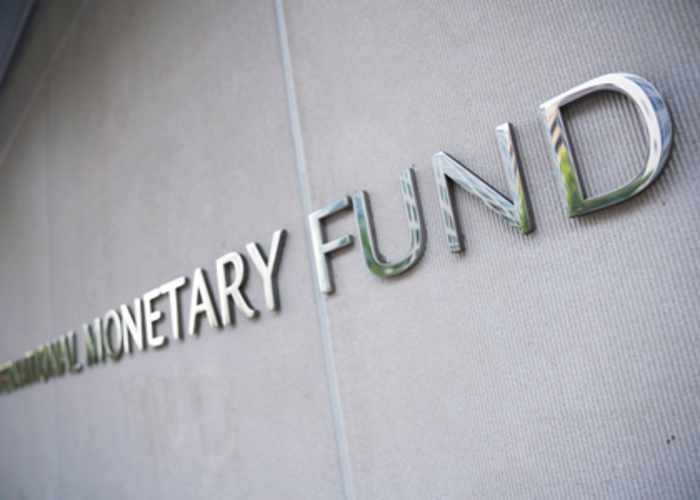
The International Monetary Fund (IMF) has reached a staff-level agreement with Pakistan that could unlock around $1.21 billion in additional financing, while warning that geopolitical tensions, elevated energy prices and trade disruptions continue to pose risks to the country’s economic recovery.
The agreement covers the fourth review of Pakistan’s 37-month Extended Fund Facility (EFF) and the third review of its 28-month Resilience and Sustainability Facility (RSF), the IMF said.
The deal requires approval by the IMF Executive Board before the funds can be released. Once approved, Pakistan would receive around $1 billion under the EFF and another $210 million through the RSF, taking total disbursements under the two arrangements to approximately $5.7 billion.
An IMF mission led by Iva Petrova held discussions with Pakistani authorities in Karachi and Islamabad from September 23 to October 7 as part of the country’s annual economic consultation and programme reviews.
Pakistan’s economy grew by an estimated 3.6 per cent in FY26, although higher energy prices and supply disruptions weakened growth momentum. Real GDP growth reached 4 per cent during the first three quarters of the financial year.
Inflation, after peaking in May, moderated to approximately 10.3 per cent in September, while the current account remained broadly balanced, supported by strong remittances. Gross foreign exchange reserves rose to around $21.5 billion by the end of September.
The IMF said sovereign credit-rating upgrades and renewed access to international financial markets pointed to stronger policy credibility, but cautioned that the recovery remained vulnerable to external shocks.
“Nevertheless, risks remain high, particularly from geopolitical tensions, volatile energy prices, tighter global financial conditions, and trade disruptions,” Petrova said.
The Fund called on Pakistan to maintain fiscal discipline and implement its FY27 budget, including an underlying primary surplus target of 2 per cent of GDP.
It also urged improvements in tax administration through risk-based audits, digital invoicing and greater use of third-party information to strengthen revenue collection.
The IMF pressed for reforms in public financial management, procurement and government cash operations to reduce borrowing costs and debt rollover risks.
On social spending, the Fund noted that Pakistan had increased health and education expenditure from 2.2 per cent of GDP in FY24 to 2.5 per cent in FY26, with plans to raise it to 2.8 per cent in FY27.
It welcomed stronger targeted cash transfers but called for the existing fuel support scheme to be phased out promptly, citing its high cost and broad coverage.
The IMF also urged the State Bank of Pakistan to maintain an appropriately tight monetary stance until inflation returns sustainably to its target range.
Energy-sector reforms remain another priority, including timely tariff adjustments, improved efficiency, greater competition in electricity distribution and measures to prevent renewed accumulation of circular debt.
The EFF supports countries undertaking economic reforms to address structural weaknesses and balance-of-payments problems, while the RSF provides longer-term financing for reforms addressing climate-related and other structural risks.
Pakistan has relied on successive IMF-supported programmes to stabilise its economy, strengthen external reserves and address persistent fiscal and energy-sector imbalances.
 FOLLOW NOW