

Mumbai, October 8, 2026 (Yes Punjab News)
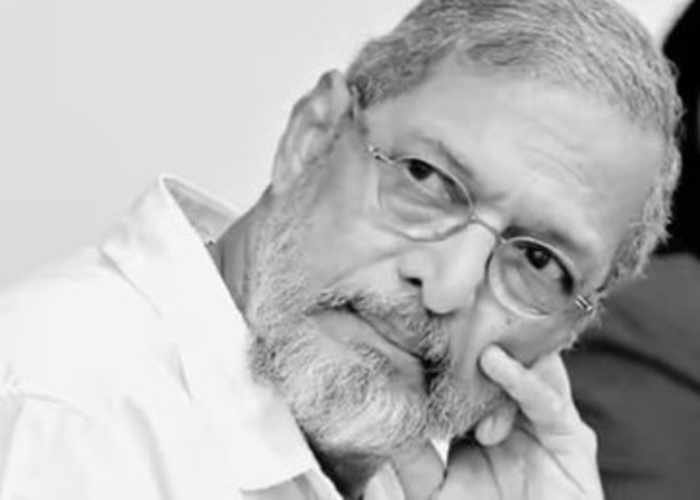
Veteran actor Nana Patekar, one of Indian cinema’s most distinctive and powerful performers, passed away on Thursday at the age of 75 after suffering a cardiac arrest at his residence in Dona Paula, Goa. He was found unconscious and taken to Manipal Hospital, where doctors attempted to revive him through continuous CPR, but he could not be saved.
Born Vishwanath Patekar on January 1, 1951, in Maharashtra, Nana Patekar built a career spanning nearly five decades across Hindi and Marathi cinema. Known for his intense screen presence, distinctive voice, forceful dialogue delivery and ability to bring emotional depth to complex characters, he became one of the most respected actors of his generation.
Patekar studied at the Sir J.J. School of Art in Mumbai and developed his craft through theatre before entering films. He made his Hindi film debut with Gaman in 1978 and appeared in Marathi cinema soon after, beginning with Sinhasan in 1979. His early Marathi work included films such as Bhalu, Raghu Maina and Savitri.
His career gained major momentum with N. Chandra’s Ankush in 1986, in which he portrayed a character shaped by the frustrations and struggles of ordinary people. He subsequently appeared in films including Pratighaat, Mohre, Andhaa Yudh and Salaam Bombay!, increasingly establishing himself through layered and unconventional roles rather than conventional romantic leads.
A defining milestone came with Vidhu Vinod Chopra’s Parinda in 1989. His portrayal of the ruthless crime boss Anna earned him the National Film Award for Best Supporting Actor and further established him as one of Hindi cinema’s most formidable performers.
Patekar continued his run of challenging roles through the 1990s in films such as Agni Sakshi, Khamoshi: The Musical, Raju Ban Gaya Gentleman, Angaar, Tirangaa, Ghulam-E-Mustafa, Yeshwant and Kohram. His performance in Krantiveer also earned him the National Film Award for Best Actor, while Agni Sakshi brought him another National Film Award for Best Supporting Actor.
In 2004, he delivered another memorable performance in Ab Tak Chhappan, directed by Shimit Amin, playing Sadhu Agashe, a Mumbai Police encounter specialist. The restrained yet intense performance became one of the best-known portrayals of his later career.
His work in Prakash Jha’s Apaharan in 2005 was widely appreciated, while films such as Taxi No. 9211, Welcome, Raajneeti, The Attacks of 26/11 and Kaala further showcased his range.
For audiences who primarily associated Patekar with intense dramatic roles, his turn as Uday Shetty in Anees Bazmee’s Welcome (2007) offered a different side. His comic timing and chemistry with Anil Kapoor transformed the character into one of mainstream Hindi cinema’s most memorable comic gangsters.
Despite his success in Hindi cinema, Patekar remained closely connected to his Marathi roots, theatre and regional cinema. His Marathi filmography included Sinhasan, Bhalu, Raghu Maina, Savitri, Pak Pak Pakaak, Deool, Natsamrat, Aapla Manus, Dr. Prakash Baba Amte: The Real Hero, Yashwantrao Chavan – Bakhar Eka Vaadalaachi and Ole Aale.
His performance in Natsamrat (2016), based on V. V. Shirwadkar’s celebrated Marathi play, became one of the defining performances of his later career. As Ganpat Belwalkar, a retired stage actor confronting ageing, changing family relationships and the loss of his place in society, Patekar drew heavily on his own theatrical experience.
Another significant Marathi performance came in Dr. Prakash Baba Amte: The Real Hero, in which he portrayed the celebrated social worker and physician Prakash Amte. The performance earned him widespread appreciation and several honours.
Patekar also ventured behind the camera. He made his directorial debut with Prahaar: The Final Attack in 1991, a film centred on the Indian Army and the life of a highly disciplined commando.
His contribution to cinema and the arts was recognised with the Padma Shri in 2013. He was also known for his association with social initiatives, particularly efforts supporting farmers and families affected by drought in Maharashtra.
Away from the screen, Patekar largely kept his personal life away from the media spotlight. He married actress Neelakanti Patekar in 1978 and they had two sons. Their younger son, Malhar Patekar, has worked behind the camera in films.
Nana Patekar leaves behind a body of work that crossed genres and languages, from gritty crime dramas and socially rooted cinema to mainstream comedy and acclaimed Marathi theatre adaptations. His performances in Parinda, Krantiveer, Agni Sakshi, Ab Tak Chhappan, Welcome and Natsamrat remain among the defining chapters of a career built on intensity, authenticity and an unmistakable screen presence.
His death marks the end of a remarkable chapter in Hindi and Marathi cinema.
 FOLLOW NOW