
New Delhi, Aug. 1, 2026 (Yes Punjab News)
The Delhi government will launch its flagship Lakshmi Yojana on Saturday, introducing a monthly financial assistance programme that will provide eligible women from economically weaker households with ₹2,500.
The scheme, one of the Rekha Gupta government’s major welfare initiatives, is aimed at strengthening financial security for women across the national capital. Eligible beneficiaries will be able to submit applications online immediately after the official launch through a dedicated portal designed for registration and processing.
The Delhi government has allocated ₹5,110 crore for the scheme in its 2026-27 Budget, with more than 17 lakh women expected to benefit once it is fully implemented.
Under the eligibility criteria, women aged between 21 and 60 years belonging to families with an annual income of up to ₹2.5 lakh will qualify for assistance. However, income tax payers, GST filers, government employees and women already receiving benefits under other government financial assistance schemes have been excluded.
The scheme also excludes families owning a four-wheeler, consuming more than 2,400 units of electricity annually, or having members employed in government departments or public sector undertakings. Women with more than three living children and those with a criminal record are also ineligible.
Beneficiaries will have two options for receiving the monthly assistance. Under one option, ₹1,500 will be deposited into a recurring deposit or fixed deposit account, while the remaining ₹1,000 will be credited to a Central Bank Digital Currency (CBDC) wallet for approved essential purchases. Alternatively, beneficiaries may opt to receive the full ₹2,500 in a recurring deposit or fixed deposit account.
Besides providing direct financial support, the Lakshmi Yojana seeks to encourage school enrolment, creation of APAAR and ABHA IDs, timely vaccination, registration on the POSHAN Tracker, participation in environmental and cleanliness campaigns, and greater involvement of women in self-help groups and skill development programmes.
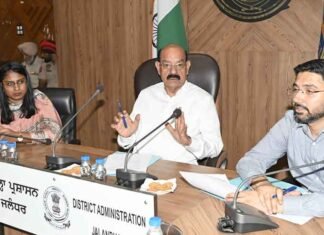
District-level committees will scrutinise applications, approve eligible beneficiaries and address grievances to ensure transparent implementation of the scheme.
 FOLLOW NOW