


New Delhi, August 4, 2026 (Yes Punjab News)
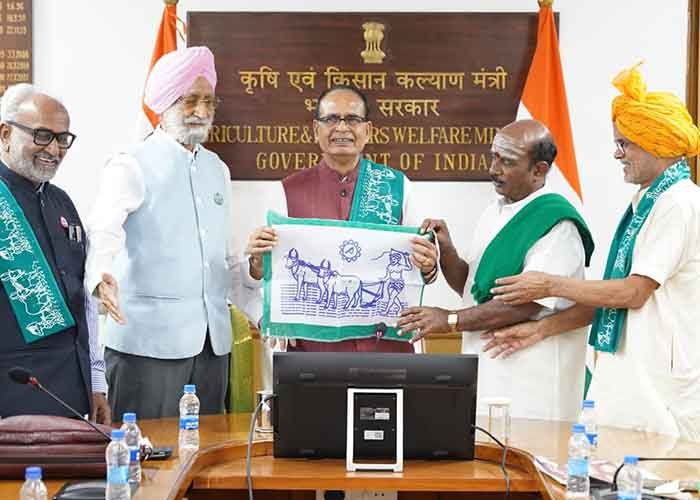
The All India Kisan Coordination Committee has submitted a memorandum to Union Agriculture and Farmers’ Welfare Minister Shivraj Singh Chouhan, seeking urgent reforms in agricultural policy with focus on farmers’ incomes, competitive markets, modern technology, crop diversification and policy stability.
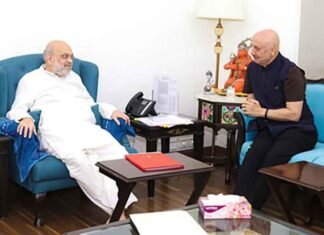
The memorandum was submitted following a meeting with the minister on August 4, 2026, and outlined a series of recommendations covering ethanol policy, minimum support price (MSP), agricultural markets, seed reforms, Punjab and Haryana’s transition package, and the need for a comprehensive National Agricultural Policy.
The farmers’ body said India’s agricultural framework should encourage diversification by ensuring alternative crops have assured markets and remunerative prices.
On ethanol policy, the committee described the programme as a positive step towards energy security and creating additional demand for agricultural produce but stressed that its benefits should reach farmers. It called for independent scientific assessment of the E20 ethanol blending programme and urged promotion of low-water feedstocks such as maize, sugarcane, sorghum and crop residue in water-stressed regions instead of increasing dependence on paddy.
The memorandum highlighted that the Food Corporation of India (FCI) supplied around 63.5 lakh tonnes of rice to ethanol plants between June 2025 and June 2026 at ₹2,250-2,320 per quintal, compared with its average acquisition cost of ₹3,719.72 per quintal in 2024-25 and ₹3,889.46 per quintal in 2025-26. It said such pricing could affect demand for maize and other ethanol feedstocks.
The committee demanded MSP-linked procurement or price support for maize and sugarcane growers before large-scale release of FCI rice to distilleries. It also sought a stable five-year feedstock and ethanol pricing policy, along with an aggressive communication campaign to counter negative perceptions surrounding ethanol-blended fuels.
On MSP and agricultural markets, the committee said government procurement alone cannot cover every crop and farmer, and farmers require both price protection during market downturns and freedom to benefit from favourable market conditions.
It recommended strengthening e-NAM as a genuine national agricultural market through common quality standards, reliable assaying systems, interstate logistics, dispute resolution mechanisms and unified trader licensing. It also sought regulated access for farmers to futures and options markets, including exchanges such as NCDEX, arguing that delivery-based futures markets can improve price discovery and reduce market risks.
The memorandum stressed that farmers must have access to modern seeds and technology, similar to the role played by improved seeds during the Green Revolution. It called for a transparent and time-bound approval process for biotechnology-enabled, climate-resilient and high-yielding seeds.
Regarding the proposed Seeds Bill, 2025, the committee said farmers’ rights to save, sow, re-sow, exchange and share farm-saved seeds must remain protected, while commercial seed companies should be held accountable for spurious seeds, false claims and poor germination.
The committee also demanded a special agricultural transition package for Punjab and Haryana, stating that farmers of these states contributed significantly to national food security by supporting the wheat-rice procurement system but now face groundwater depletion, soil degradation and rising debt.
The proposed package includes restructuring of verified distressed institutional farm loans, interest relief, MSP-linked support for maize, pulses and oilseeds, assured marketing arrangements, income protection for farmers shifting away from paddy, investment in processing and storage infrastructure, greater support for horticulture, livestock, agroforestry, drip irrigation and restoration of canals and field channels.
The memorandum argued that such support should not be viewed as charity but as recognition of the contribution made by Punjab and Haryana farmers towards national food security and the ecological costs they have borne.
Calling for institutional reforms, the committee proposed the creation of a National Agricultural Policy Commission with a six-month mandate involving Union ministries, states, farmers’ organisations, the Indian Council of Agricultural Research (ICAR), agricultural universities, economists and market experts.
It said the commission should review agricultural laws and governance structures to address overlapping responsibilities between the Centre and states while preserving the federal framework.
The committee also called for reforms in the Essential Commodities Act, 1955, arguing that stock limits and movement restrictions should only be imposed during clearly defined shortages, based on published criteria and for limited periods.
Seeking stability in trade policy, the memorandum said export bans, duties or duty-free imports announced after sowing decisions adversely affect farmers by disrupting price signals. It suggested that major trade-policy changes should generally be announced before sowing seasons, with consultations between the Ministries of Commerce and Agriculture.
The farmers’ body said consumers should be protected through measures such as the Public Distribution System, targeted assistance and price-stabilisation funds rather than by suppressing farm prices.
The memorandum urged the agriculture minister’s personal intervention to initiate reforms aimed at providing farmers fair prices, modern technology, competitive markets, agro-processing opportunities, ethanol development, bio-waste management and protection from sudden policy changes.
 FOLLOW NOW