


Chandigarh, August 4, 2026 (Yes Punjab News)
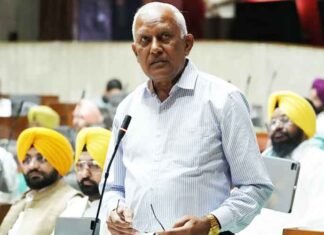
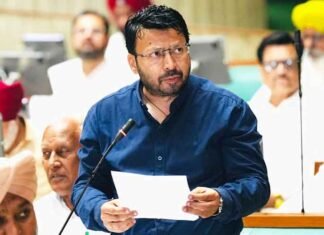
Punjab Industries and Commerce Minister and Aam Aadmi Party (AAP) Punjab president Aman Arora on Tuesday questioned the Centre’s decision to implement 20 per cent ethanol blending in petrol, alleging that the policy was being pushed without adequate consultation or scientific evidence.
Participating in the Punjab Assembly discussion on the resolution related to E20 petrol, Arora compared the Centre’s approach to the 2016 demonetisation exercise, saying that major claims were made at the time but the ground impact remained different.
He alleged that the government had claimed E20 would reduce the import bill, benefit farmers and conserve water but had not placed any scientific reports in the public domain to support these claims.
Questioning the pace of implementation, Arora said countries such as the United States, Canada, the European Union, Australia and China had adopted ethanol blending gradually. He pointed out that the US, despite starting ethanol blending decades ago, continues with a lower blending percentage compared to India’s move towards E20.
“Why is India moving directly to 20 per cent blending without adequate preparation?” he asked, while questioning the Centre’s decision-making process.
Raising technical concerns, Arora claimed that several automobile companies had informed AAP National Convenor Arvind Kejriwal that vehicles manufactured before 2023 were not compatible with E20 fuel. He said the policy could affect mileage, engine performance, vehicle components and resale value.
Arora also referred to the NITI Aayog’s Roadmap for Ethanol Blending in India 2020-25, saying it had highlighted concerns including food security, groundwater depletion, distillation capacity, logistics infrastructure and regional imbalance in food stocks.
Rejecting the argument that ethanol blending could be justified through surplus paddy availability in Punjab, Arora said crop diversification was the long-term solution. He called for a broader agricultural policy shift, including Minimum Support Price (MSP) for all 23 notified crops, including pulses, oilseeds, mustard and groundnut.
He said India spends nearly ₹2 lakh crore annually on imports of edible oils and pulses and argued that diversification towards these crops could help conserve groundwater and reduce the country’s import dependence.
Arora urged the Centre to adopt a transparent and consultative approach before implementing policies affecting millions of citizens and vehicle owners.
 FOLLOW NOW