

United Nations, September 13, 2026 (Yes Punjab News)
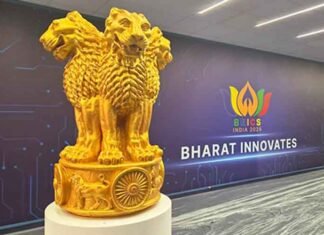
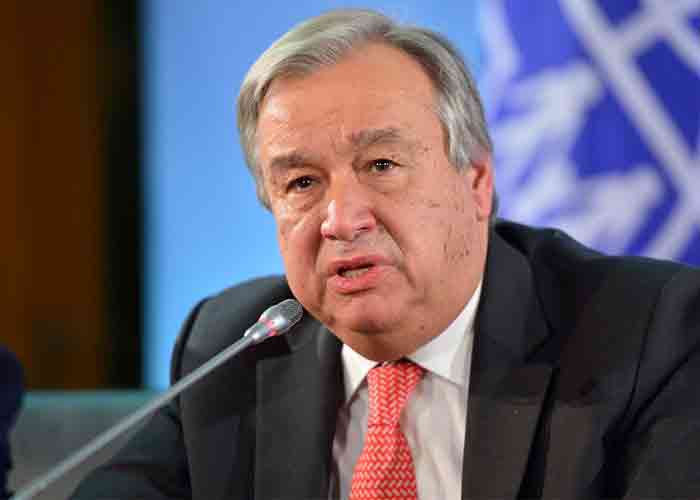
UN Secretary-General Antonio Guterres has said the “irreversible” rise of multipolarity reflected at the BRICS Summit has made reform of the UN Security Council and other multilateral institutions essential to ensure they better represent the world of today.
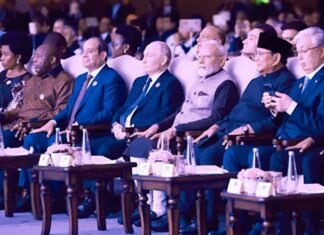
Addressing the 11-nation BRICS Summit in New Delhi, Guterres said multipolarity could help bring “balance to global systems and institutions” and accelerate development, but only if international institutions are reformed.
He specifically called for changes to the UN Security Council and the Bretton Woods system of international financial institutions.
Drawing a parallel with the changing global order, Guterres referred to the Equal Earth map endorsed by the UN General Assembly this month. He said the earlier Mercator projection had distorted the representation of the world by enlarging some regions and diminishing others.
“The new map reflects the world more accurately as it is,” he said, adding, “Our institutional structures must do the same.”
Guterres, who is entering the final quarter of his tenure as UN Secretary-General, used the BRICS gathering as a platform to outline key priorities that have shaped his agenda over the past decade.
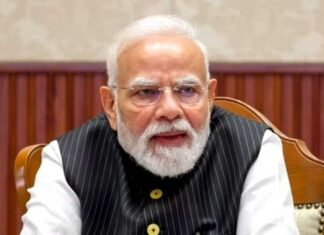
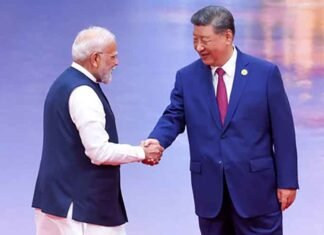
He noted that Prime Minister Narendra Modi and Chinese President Xi Jinping and Russian President Vladimir Putin, along with other leaders attending the summit, collectively represent more than half of humanity.
“As we move irreversibly to a multipolar world, all countries must work to strengthen and safeguard a multilateral system that delivers for all,” Guterres said.
He also endorsed the summit’s focus on resilience, innovation, cooperation and sustainability and outlined four pillars he described as essential for inclusive global growth: finance, technology including artificial intelligence, climate justice and peace.
On finance, Guterres called for multilateral development banks to become “bigger, better and bolder”, with new business models capable of mobilising large-scale private investment and expanding concessional funding. He also called for stronger debt-relief mechanisms.
On artificial intelligence, he warned that the technology could “compress decades of development into years”, but its concentration among a small number of companies and countries could widen existing inequalities in income, opportunity, security and sovereignty.
He said BRICS countries possess talent, ideas and scale but noted that many face shortages in computing capacity and data.
On climate change, Guterres warned that a “supersized El Nino” could intensify extreme heat, glacier melt, wildfires and floods. He called for developed countries to honour their commitment of $300 billion annually to support developing nations in addressing climate change.
On peace, Guterres pointed to conflicts stretching from the Gulf and Ukraine to Sudan and stressed that “the world needs peace”.
He also emphasised the importance of international navigational rights and freedoms and respect for the territorial integrity of nations.
 FOLLOW NOW