
New Delhi, September 12, 2026 (Yes Punjab News)
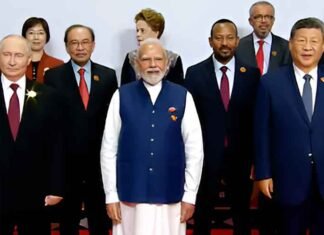
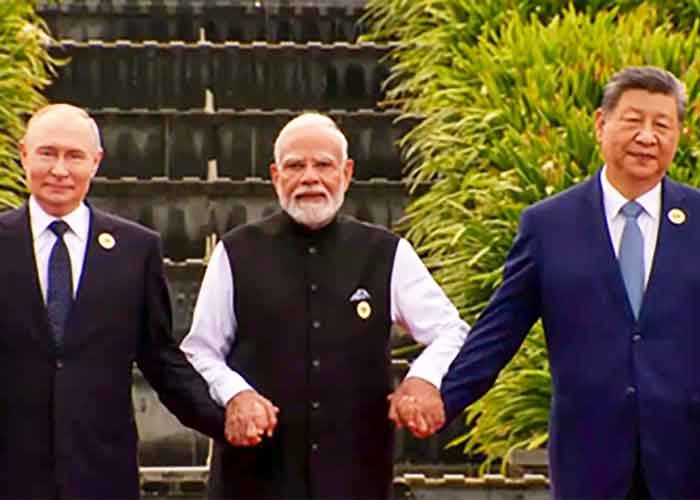
The 2026 BRICS Summit in New Delhi has brought the long-dormant Russia-India-China (RIC) axis back into the geopolitical spotlight, highlighting the possibility of renewed trilateral convergence even as deep contradictions continue to define relations among the three countries.
The RIC framework, conceived in the late 1990s as a dialogue mechanism aimed at counterbalancing Western dominance, was constrained by the limitations of a purely trilateral format. The subsequent emergence and expansion of BRICS transformed that concept into a broader multilateral platform with global reach.
BRICS now provides an institutional framework for Russia, India and China to engage with one another alongside emerging powers including Brazil, South Africa, Iran, Egypt, Ethiopia and the UAE.
The renewed convergence comes despite serious India-China differences, including border disputes and persistent trade imbalances. India’s trade with China has crossed $150 billion in recent years, but the continuing deficit points to deeper structural concerns.
Russia remains an important supplier of defence equipment and energy to India. However, its growing dependence on China amid Western sanctions has complicated New Delhi’s strategic calculations. China’s expanding presence in the Indian Ocean and close ties with Pakistan also remain significant concerns for India.
At the same time, BRICS offers a mechanism to manage these contradictions. India and China cooperate within the grouping on issues including trade, climate change and reform of international financial institutions, while Russia uses the platform to broaden its partnerships beyond the West and retain a role in facilitating engagement between New Delhi and Beijing.
The expanded BRICS grouping now represents more than 40 per cent of the world’s population and an increasing share of global GDP, giving India greater weight in discussions on global governance and creating opportunities for markets, infrastructure financing, technology and energy cooperation.
For South Asia, however, the bloc also has strategic implications. Pakistan is expected to watch developments following Saturday’s New Delhi Declaration closely, particularly as BRICS positions can influence debates on global conflicts and the future of Western-led institutions.
The durability of the RIC axis will ultimately depend on whether India and China can contain their strategic rivalry within the broader BRICS framework and whether Russia can retain sufficient strategic independence to balance its relationships with both countries.
In that sense, BRICS has emerged not only as an enabler of RIC cooperation but also as a test of whether the trilateral grouping can remain relevant amid competing national interests.
 FOLLOW NOW