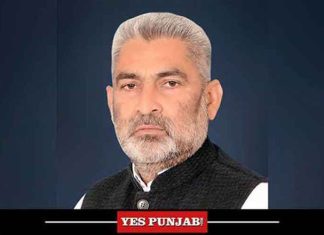


The disruption caused by the Strait of Hormuz crisis has highlighted a critical gap in India’s preparedness: while the country has built substantial financial reserves to withstand external shocks, it needs stronger physical and institutional reserves to ensure continuity of essential supplies, according to Mir Junaid.
In an analysis of the crisis, Junaid argues that India’s experience in 2026 demonstrates the need to convert emergency measures adopted during the disruption into a permanent national resilience framework.
The crisis began after the United States and Israel struck Iran on February 28, prompting Iranian retaliation and the closure of the Strait of Hormuz to most commercial shipping. Brent crude rose from around $72 before the strikes to nearly $120 within nine days and crossed $126 by the end of April.
Qatar subsequently declared force majeure on gas contracts supplying more than two-fifths of India’s imported LNG. More than two dozen Indian-flagged ships and around 780 Indian seafarers were inside the Gulf. By August, the cost of transporting a barrel of Saudi crude to India had risen more than fourfold, while war-risk insurance for a single Hormuz transit was reportedly as high as $10 million.
India’s foreign exchange reserves fell by more than $47 billion from their late-February peak by late May, while the rupee touched record lows before reserves were rebuilt through swap inflows.
The Reserve Bank of India opened its dollar swap facility on June 8. By August 31, it had mobilised $136.38 billion, including $127 billion from overseas Indians placing three-to-five-year deposits with Indian banks. Junaid notes that the operation mobilised roughly four times the amount raised through comparable swap windows in 2013.
However, he argues that the timing of the response is more important than the size of the mobilisation.
“The physical shock came first. The dollar shield came three months later,” he writes, arguing that the financial operation helped fund India’s adaptation but could not prevent the initial disruption.
Junaid distinguishes between two forms of national reserves. The first is financial, comprising dollars, gold and credit lines. The second is physical and institutional, including inventories, ships, contracts, insurance, payment channels, decision-making mechanisms and international relationships that allow a country to secure essential supplies when physical availability, rather than money, becomes the constraint.
He points out that India’s financial position remained considerably stronger than during the 2013 external stress episode. India ended August with reserves near $729 billion, while its forward book had reached about $137 billion in July. After accounting for the forward position, reserves stood at roughly $590 billion against $327 billion of external debt falling due within a year at the end of March, providing about 1.8 times coverage.
The rupees created against the dollar mobilisation also left the banking system with a record liquidity surplus of around ₹9.7 trillion, which the RBI must manage. India’s current account deficit was 0.6 per cent of GDP last year, compared with 4.8 per cent in the year ending March 2013.
The greater vulnerability, according to Junaid, lies in India’s physical supply chains.
India imports 88.7 per cent of its crude oil, with 41-52 per cent having traditionally moved through Hormuz. The country’s strategic petroleum reserve provides nine and a half days of requirement at full capacity, but it was around 64 per cent full when the war began, equivalent to roughly six days.
By May, the government estimated rolling stocks at 60 days of crude, 60 days of gas and 45 days of LPG, including refiners’ inventories and cargoes contracted or at sea. Junaid notes, however, that public data does not distinguish how much of that cover could immediately be deployed during an emergency from supplies required to maintain refinery operations.
Imported LNG accounted for around half of gas demand in June, while the fertiliser sector was the second-largest consumer. Since India’s urea plants are gas-dependent, a disruption in gas supplies can quickly affect urea production during critical sowing periods. Stocks were a third higher in 2026 than a year earlier, while a government allocation order helped prevent the pressure from reaching farmers.
Shipping remains another vulnerability. Indian-flagged vessels carried only 6.1 per cent of India’s overseas cargo in 2024-25, down from around 41 per cent in 1987-88, despite the fleet carrying roughly twice the tonnage it did then. India’s trade, however, has grown much faster, leaving the country dependent on foreign-controlled vessels for most of its overseas cargo.
Junaid also credits crisis management measures for helping India adapt quickly. Non-Hormuz crude sourcing increased from around 55 per cent to nearly 70 per cent within weeks. The United States became India’s largest LNG supplier for the first time, while a gas-allocation order was issued within nine days.
An Informal Group of Ministers led by the Defence Minister began meeting in March on fuel, fertiliser, shipping and essential supplies. A sovereign-backed maritime insurance pool was approved in April and issued its first war-risk policy on May 12.
These measures, Junaid argues, demonstrated India’s ability to respond effectively under pressure, but also exposed the cost of relying heavily on emergency adaptation. India had to operate with relatively thin dedicated buffers, foreign shipping, overseas insurance and freight costs two to five times higher than before the conflict.
The author proposes what he calls “deterrence by continuity” — ensuring that no single external disruption can halt an essential national function. Rather than pursuing autarky or indiscriminate import substitution, he advocates targeted redundancy for sectors where a disruption of around 90 days could threaten essential functions.
He cites Finland’s security-of-supply framework and Japan’s economic-security legislation as international examples, while stressing that India should develop its own model.
Junaid proposes five measures: allowing producers to fill leased strategic petroleum storage at their own cost while giving India first-call rights; creating a designated pool of Indian-controlled tankers and gas carriers for emergency imports; institutionalising the existing priority framework for gas supplies to fertiliser plants and measuring fertiliser stocks in weeks of seasonal cover; establishing a rehearsed multi-currency settlement mechanism for emergency energy purchases; and making the crisis-coordination function permanent within the existing national security architecture.
He argues that the final element — measurement — should become the foundation of the system. For each essential function, India should track three indicators: assured days of continuity, concentration of dependence, and the time required to substitute or reroute supplies.
The proposals, he acknowledges, carry costs. Strategic storage requires capital, standby ships require fees and insurance arrangements create contingent liabilities. The objective, therefore, should be the cheapest credible redundancy capable of keeping an essential function above a defined threshold.
Junaid also stresses that the measures would not make India independent of global markets. During the Hormuz crisis, India still needed safe passage from Tehran, a sanctions waiver from Washington for Russian crude and replacement cargoes from an increasingly tight global market.
The author argues that the difference lies in when and from what position a country has to seek external assistance.
The overseas Indians who placed deposits through the RBI-backed mobilisation are expected to be repaid under the commercial terms of those deposits, with the obligations falling due between 2029 and 2031. Junaid argues that the success of the exercise should not simply be measured by the size of India’s reserves.
Instead, the lesson of the Hormuz crisis, he concludes, should be to ensure that the emergency adaptations of 2026 become designed and permanent continuity mechanisms, reducing the need for future financial shields.
Mir Junaid is President of the Jammu & Kashmir Workers Party and Founding President of the Centre for Inclusive & Sustainable Development.
 FOLLOW NOW