

The release of Oni Sen’s six-part series Operation Safed Sagar on Netflix has brought renewed attention to the Indian Air Force’s high-altitude operations during the 1999 Kargil conflict. The series dramatises tactical reconnaissance missions and precision strikes by the IAF’s No. 17 “Golden Arrows” Squadron at altitudes above 20,000 feet.
Yet the story of Kargil was not confined to the skies or the mountain peaks. Behind every sortie and every ridge reclaimed by Indian troops lay a critical strategic objective — keeping open the vital road artery that sustained the forces fighting in some of the world’s most difficult terrain.
The Kargil conflict demonstrated a fundamental military truth: tactical success on high-altitude positions depends on protecting the lines of communication that keep those positions supplied.
When Pakistani forces occupied ridgelines overlooking Dras, Batalik and the Mushkoh Valley, one of their principal objectives was to place National Highway 1D, then designated NH-1A, under observation and artillery fire. Control over the road could have disrupted supplies to Ladakh and the approaches to Siachen, isolating forward military positions.
The Indian Armed Forces responded with a coordinated campaign to secure the corridor while simultaneously evicting the intruders from the heights.
Operation Safed Sagar became an important component of that effort. IAF pilots conducted reconnaissance and precision strikes despite extreme altitudes and hostile ground fire, targeting enemy positions and logistics hubs, including at Muntho Dhalo. By suppressing positions on the heights, air operations helped create conditions for army convoys to continue moving along the strategic highway.
The relationship between military operations and logistics, however, predates modern warfare by centuries. Kautilya addressed the importance of supply lines and movement routes in the Arthashastra, particularly in his discussion of operations against fortified positions.
In Book XIII, he advises commanders confronting an enemy in difficult terrain to destroy stored provisions and crops and disrupt the enemy’s vīvadha and prasāra — broadly referring to supply lines and avenues of movement and reinforcement. The objective was to bring about prakṛti-kṣaya, or the gradual exhaustion of the resources and elements sustaining the enemy’s military strength.
The principle was not simply to defeat an enemy through a decisive assault, but to make his position increasingly difficult to sustain.
Kautilya also stressed that a commander must first secure his own camp, supply routes and roads before launching an assault. The instruction assumes particular relevance when viewed against the Kargil campaign.
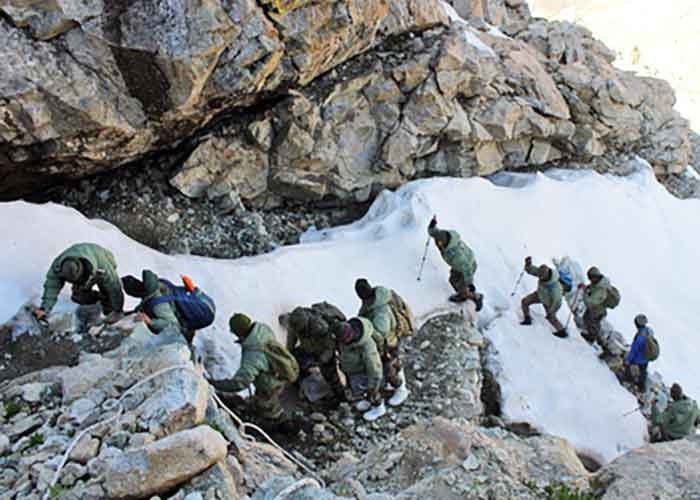
Reopening and maintaining NH-1D was fundamental to the Indian offensive. Artillery pieces, including the Bofors guns whose fire proved crucial during the conflict, had to be moved forward along the road. So did ammunition, food and other supplies required by troops fighting at extreme elevations.
While infantrymen displayed extraordinary courage in scaling near-vertical slopes to recapture positions such as Tololing and Tiger Hill, the uninterrupted flow of logistics made sustained operations possible.
Kautilya’s emphasis on preparation is equally relevant. His prescription to secure roads and supply routes before committing forces to an assault mirrors the operational realities of Kargil. Indian forces had to move guns into position, acclimatise troops and build the logistical capacity required for sustained combat before committing them fully to difficult objectives.
The strategic lessons of 1999 have since influenced India’s approach to infrastructure along its northern frontiers. For decades, harsh winters themselves created a vulnerability similar to the one the adversary sought to exploit during the Kargil conflict. Heavy snowfall regularly closed Zoji La at an altitude of around 11,500 feet, leaving Ladakh isolated for several months each year.
India has increasingly sought to eliminate that seasonal vulnerability through all-weather infrastructure.
The Z-Morh Tunnel, opened in early 2025, provides year-round connectivity to Sonamarg. The 14-km Zoji La Tunnel project is intended to establish permanent all-weather connectivity between Srinagar and Leh. Meanwhile, Border Roads Organisation efforts have already improved winter access, with the Zoji La stretch remaining open through February 2025 — the first such occurrence.
The infrastructure push extends across the Line of Actual Control, including strategic projects such as the 1,840-km Arunachal Frontier Highway. Alongside modernised airbases and other military infrastructure developed in the post-Kargil period, these transport links are intended to strengthen year-round mobility and operational preparedness.
The central lesson of Kargil therefore extends beyond the heroism witnessed on the battlefield. The bravery of soldiers on the heights and pilots in the skies captured national attention, but their success depended equally on the roads, artillery, supplies and logistical networks that sustained the campaign.
As Operation Safed Sagar brings the air war of 1999 back into public view, the broader legacy of the conflict can also be seen in the tunnels, highways and mountain infrastructure being built today — an effort to ensure that India’s strategic frontier arteries remain open when they are needed most.
The writer is a doctoral scholar at O.P. Jindal Global University. Views expressed are personal.
 FOLLOW NOW