New Delhi, August 10, 2026 (Yes Punjab News)
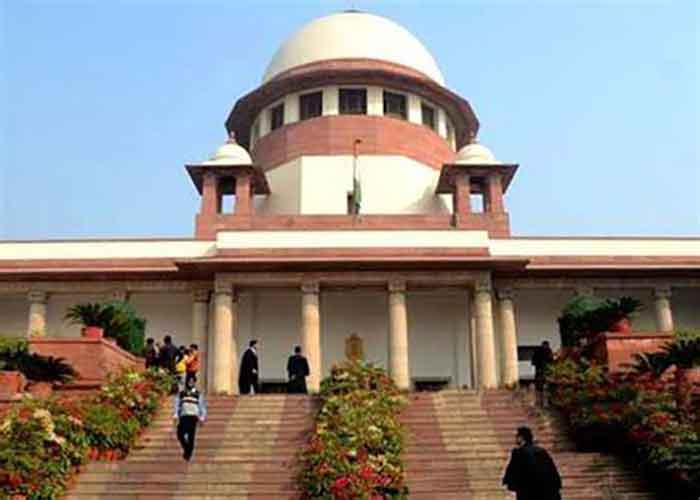
The Supreme Court on Monday sought responses from the Centre and state governments on a Public Interest Litigation (PIL) seeking a uniform, time-bound framework for investigation and speedy trial of cases registered under the Narcotic Drugs and Psychotropic Substances (NDPS) Act.
A Bench comprising Chief Justice of India Surya Kant and Justices Joymalya Bagchi and V. Mohana issued notice on the petition filed by advocate Ashwini Kumar Upadhyay. The matter has been posted for further hearing on September 28.
The PIL seeks mandatory timelines for submission of Forensic Science Laboratory (FSL) reports in NDPS cases and a standard operating procedure (SOP) governing search, seizure and sampling in cases involving small and intermediate quantities of narcotic substances.
It has also sought Special Courts under Sections 36 and 36A of the NDPS Act and a uniform SOP to ensure time-bound investigation and speedy trials.
The petitioner has argued that the absence of uniform investigation practices, timely forensic examination and effective monitoring has contributed to delays in narcotics cases, procedural lapses and inconsistent enforcement across states.
The plea proposes mandatory digital recording and videography of search, seizure, sampling and inventory proceedings, contending that greater documentation would improve transparency and reduce acquittals arising from procedural deficiencies.
Among other measures, the petition seeks an expert committee to identify and ensure timely scheduling of New Psychoactive Substances (NPS), including synthetic opioids. It also seeks the establishment and operationalisation of rehabilitation and wellness centres and effective implementation of Sections 39 and 64A of the NDPS Act, which provide for treatment-related mechanisms and immunity from prosecution in specified circumstances for addicts who voluntarily undergo de-addiction treatment.
The PIL has proposed a graded sentencing framework under which traffickers and financiers would face stringent and proportionate punishment while addicts and persons involved in personal-use offences would be treated differently. It has also sought consideration of consecutive sentences in appropriate cases.
The petitioner has further sought time-bound identification, assessment and confiscation of assets allegedly linked to drug traffickers and financiers under the NDPS Act, Prevention of Money Laundering Act, Benami Property Act, Black Money Act and other applicable laws.
According to the plea, drug abuse has consequences extending beyond individual offenders, affecting public health, families, public order and national security. It refers to drug-related deaths, addiction-linked violence and trafficking networks, including alleged drone-based smuggling along border areas.
The petition cites data attributed to the Narcotics Control Bureau to claim that drug cases rose by 53 per cent in 2025, with 1,48,063 cases registered and 1,240 tonnes of drugs seized.
It also highlights concerns over the growing presence of NPS and calls for a permanent mechanism for their identification and scheduling.
The petitioner has contended that continuing substance abuse and gaps in investigation, prosecution, rehabilitation and enforcement raise constitutional concerns under Articles 14 and 21, as well as issues relating to the State’s obligations under Article 47.
The PIL has additionally sought directions to the Law Commission of India to prepare a comprehensive report on the issue and called for coordinated action by the Centre and states to strengthen investigation, forensic examination, asset tracing, prosecution and rehabilitation in narcotics cases.
 FOLLOW NOW