Damascus, August 11, 2026 (Yes Punjab News)
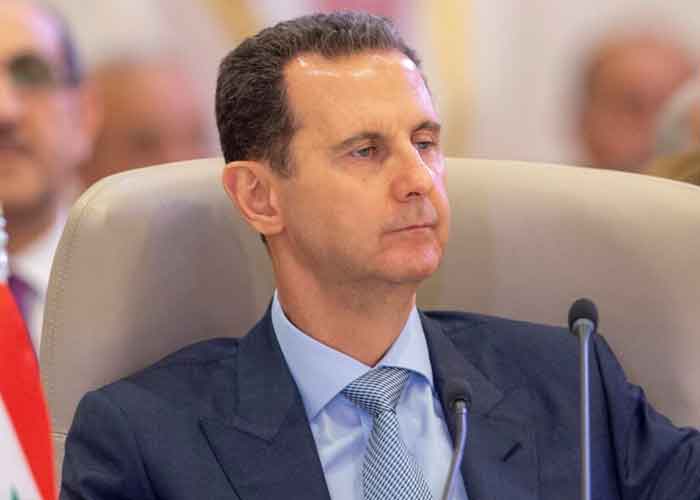
A Syrian court has sentenced former President Bashar al-Assad and several former officials to death in absentia after convicting them of crimes including arbitrary detention, premeditated murder, torture and crimes against humanity, according to local media reports.
Judge Fakhr al-Din al-Aryan said the court found Assad guilty of crimes against humanity and other offences, citing his position as the country’s highest decision-maker and his role in issuing orders to state institutions involved in the alleged violations.
The court also sentenced Atef Najib, Assad’s cousin and former head of Political Security in Daraa, to death. Syrian Arab News Agency (SANA) reported that death sentences were also handed down against several other former officials described as fugitives.
They were identified as Louay Ali al-Ali, Maher Hafez al-Assad, Fahd Jassem al-Freij, Mohammad Ayman Ayoush, Qusay Ibrahim Mahyoub, Wafiq Saleh Nasser and Talal Fares al-Aysami.
According to the judge, the defendants were convicted of premeditated and intentional murder as well as torture that resulted in deaths.
Assad’s government collapsed on December 8, 2024, after a 12-day offensive led by Hayat Tahrir al-Sham (HTS) and allied militant groups. Assad and members of his family subsequently fled to Russia, where he was granted asylum.
In a statement released after his departure through the Syrian Presidency’s Telegram account, Assad said he had not planned to leave Syria and had remained in Damascus until the early hours of December 8 while carrying out his duties.
He said that after militant groups entered Damascus, he coordinated with Russian officials to relocate to Latakia, intending to continue directing military operations from there.
According to Assad’s account, he travelled to Russia’s Hmeimim Air Base, where he realised that remaining Syrian army positions had collapsed and ground forces had withdrawn from the front lines. He said the Russian base subsequently came under drone attack and that Moscow arranged his evacuation to Russia on the evening of December 8.
Assad rejected suggestions that he had planned to seek asylum or abandon his position, saying he had intended to continue fighting and had not agreed to any “deals and temptations” during the conflict.
He also said he had continued living in Damascus with his family through the worst years of the conflict and described his leadership as part of what he regarded as a national project supported by the Syrian people.
 FOLLOW NOW