

New Delhi, August 11, 2026 (Yes Punjab News)
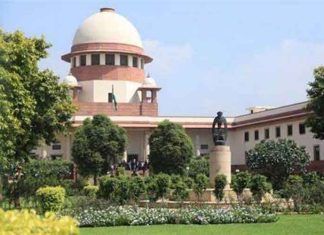
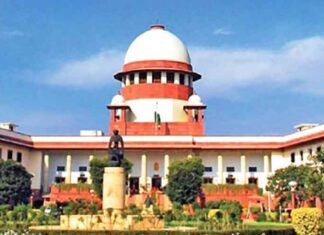
The Supreme Court on Tuesday declined to interfere with the Enforcement Directorate’s (ED) freezing of three bank accounts of the Trinamool Congress in an alleged money laundering case, while allowing the existing arrangement for the party to meet its day-to-day expenses under judicial supervision.
A Bench of Justices M.M. Sundresh and Prasanna B. Varale was hearing a petition filed by the Trinamool faction led by Mamata Banerjee challenging a Calcutta High Court order that had refused interim relief against the freezing of three HDFC Bank accounts.
The Supreme Court also disposed of a separate petition filed by rebel TMC leader Biswanath Das, who had challenged the High Court’s order while claiming to represent the “real party”.
The Bench described the High Court’s arrangement as “balanced”, noting that it allowed the party to continue its routine operations while keeping the accounts under the supervision of a Special Officer appointed by the High Court.
“We will not say anything. We will dispose of both the matters and leave it to the discretion of the Special Officer appointed by the High Court. Whatever you want to say, say it in the main petition,” the Bench observed.
The Supreme Court made it clear that it was not examining the dispute between rival factions of the Trinamool Congress and was concerned only with the limited question of operating the frozen accounts.
The parties have been permitted to raise their objections before the Special Officer and in the main proceedings pending before the Calcutta High Court.
Senior advocate Kapil Sibal, appearing for the Trinamool, argued that while the alleged proceeds of crime were around Rs 160 crore, more than Rs 400 crore was lying in the frozen accounts.
“Everything is frozen. We can’t pay salaries. We can’t pay our employees. Why are you freezing more than the proceeds of crime? They are also freezing recipient accounts. This is not fair,” Sibal submitted.
Additional Solicitor General S.V. Raju, appearing for the ED, said the party remained protected with regard to the use of the accounts for day-to-day expenses. He also pointed to nearly Rs 120 crore being available and referred to the ongoing dispute within the party.
Senior advocate K. Parameshwar, appearing for a rebel Trinamool MLA whose complaint had preceded the freezing of the accounts by the West Bengal Police, argued that one faction should not be allowed to operate the accounts.
The Supreme Court, however, declined to enter the factional dispute, holding that the existing interim arrangement adequately addressed the party’s immediate operational requirements.
The case concerns three HDFC Bank accounts belonging to the Trinamool Congress. The accounts were initially subjected to debit restrictions following directions from the West Bengal Police and were later frozen by the ED.
On July 9, the Calcutta High Court permitted the party to use the accounts for daily expenditure, including legal expenses, subject to strict supervision. Justice Sougata Bhattacharya had appointed retired Justice Subrata Talukdar as Special Officer to oversee the accounts until September 30.
Under the arrangement, two authorised signatories of the Trinamool can issue cheques, but each cheque requires the counter-signature of the Special Officer.
The three accounts contained total deposits of around Rs 440 crore and were subjected to debit restrictions after police received complaints alleging that the funds could be misused and could contain proceeds linked to corruption and extortion.
The matter subsequently came under the ED’s investigation after the agency registered an Enforcement Case Information Report (ECIR) on June 23 based on a predicate FIR lodged by the Cyber Crime Police Station, Bidhannagar.
The ED imposed debit restrictions under Section 17(1-A) of the Prevention of Money Laundering Act (PMLA), alleging suspicious transactions involving around Rs 164 crore.
The Trinamool challenged the action before the Calcutta High Court, alleging that the freezing of the accounts was arbitrary and mechanical and that the agency had failed to identify or segregate any specific proceeds of crime.
However, on July 20, a single-judge Bench of Justice Krishna Rao declined to grant interim relief, holding that the party had failed to establish a prima facie case or balance of convenience in its favour.
 FOLLOW NOW