

New Delhi, September 14, 2026 (Yes Punjab News)
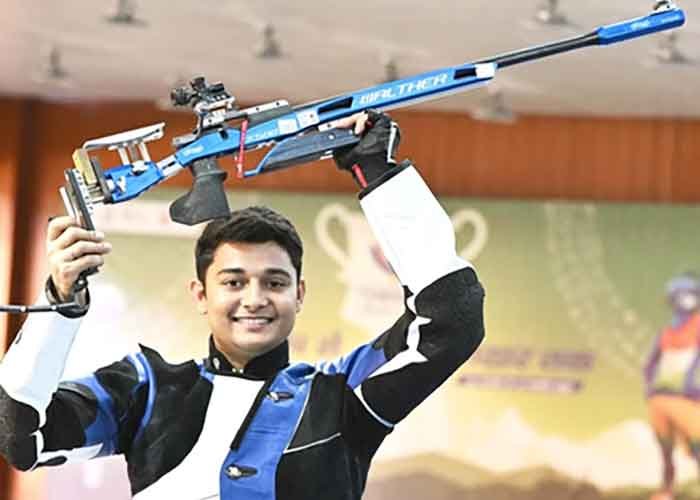
For Niraj Kumar, the decision to pursue shooting came at a time when his parents were preparing to send him to college. Instead of spending their savings on his higher education, the young shooter asked them to buy him a rifle, convinced that shooting could become his career.
“Give me the rifle. I will see the college degree later. First, I have to shoot,” Niraj recalled.
The rifle cost around Rs 3-3.5 lakh, a significant investment for a family with no sporting background. Niraj had first picked up a rifle at the age of 14 in 2014 after being introduced to shooting through the National Cadet Corps (NCC).
His father, a retired Army officer, had enrolled him in the NCC hoping it would help him pursue a career in the armed forces. Niraj had played kabaddi, table tennis and basketball at school, but shooting soon became his biggest fascination.
Through the NCC, he took up the 50m Rifle Prone event and competed in Inter-Battalion and Inter-Group competitions. As medals began to come, what started as an interest developed into a serious ambition, with an Olympic medal eventually becoming his long-term goal.
Convincing his parents was not easy. With no sportsperson in the family and shooting requiring expensive equipment, they were cautious about the uncertainty of a sporting career.
The NCC provided Niraj with a rifle until his first national competition, but he needed his own equipment thereafter. He began teaching younger NCC cadets and used the final 15-20 minutes of their training sessions to practise. He also competed with rented rifles, but the limitations eventually pushed him to a breaking point.
“That was my breaking point. I thought either I will do it with my own rifle, or I will stop. Otherwise, my time would just be wasted,” he said.
His parents eventually backed his decision and bought him the rifle. Niraj repaid their faith by winning junior silver at the National Championships in 2016 and junior gold in 2017.
The performances also strengthened another ambition born during his NCC days — joining the Indian Navy through shooting. After his first national medal, he approached a Navy coach but was told he was too young and needed another medal.
He returned the following year and won national gold before joining the Indian Navy through its sports quota in January 2018.
For his parents, the move provided the financial and professional security they had wanted for their son. For Niraj, it offered a stable platform from which to continue his shooting career.
“They told me that now my future is secure from their side and that I could fly as high as I wanted,” he said.
Niraj then made the difficult transition from 50m Rifle Prone to the more demanding 50m Rifle 3 Positions event, which involves kneeling, prone and standing positions.
Without a dedicated coach initially, he spent much of 2018 and the first half of 2019 studying ISSF videos on YouTube, analysing techniques and learning the finer aspects of the discipline. After entering the national setup, he also observed senior shooters and sought guidance from national coaches.
His efforts took him onto the international stage, including a junior medal at the Asian Championships in 2019.
Several coaches and senior shooters have contributed to his development, with foreign coach Thomas Farnik, who joined the Indian squad in 2022, becoming a major influence. The National Rifle Association of India (NRAI) also provided a structured platform through regular national camps.
“When I came into the junior squad, I started going for national camps. There were four-five camps in a year, and that gave me a proper platform to train and improve,” Niraj said.
He believes the support system for Indian shooters has also evolved, allowing athletes to focus more closely on performance.
“Whether it is the coaches, physiotherapists, psychologists, nutritionists or the arrangements for camps and competitions, the federation takes care of a lot of things. As an athlete, you can then focus on your shooting,” he said.
Niraj also credits his friend Sumesh, who supported him during the difficult early years and even shared training ammunition when resources were limited.
His family, too, has gone from being cautious about his career choice to becoming his strongest support system. His father now encourages him to focus on performance, while his elder brother serves in the Army. His mother, a homemaker with little exposure to competitive shooting, watched him compete for the first time on television during the 2021 Delhi World Cup, where he reached the final.
From asking his parents to spend his college savings on a rifle to becoming part of India’s elite shooting setup, Niraj’s journey has been shaped by conviction, perseverance and family support.
The question for him is no longer whether shooting can provide a future. His sights are now firmly set on how far that journey can take him — and an Olympic medal remains the ultimate target.
 FOLLOW NOW