
Chandigarh, September 12, 2026 (Yes Punjab News)
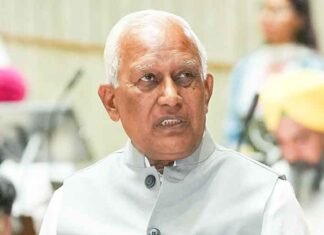
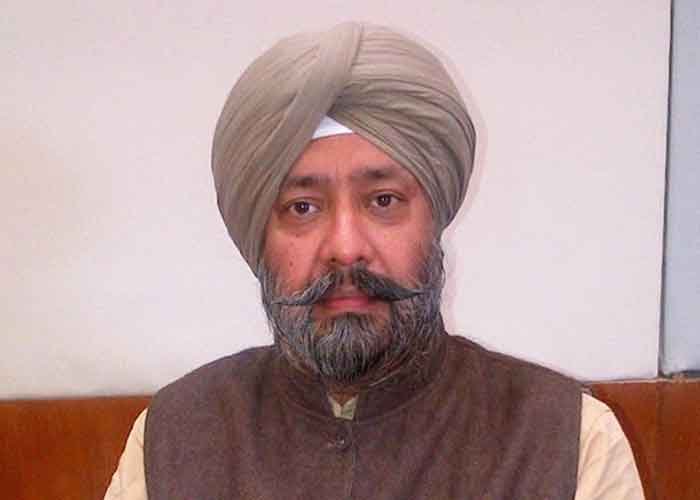
Every undergraduate in Punjab, whether reading engineering, commerce, medicine, agriculture or law, should have to complete a common foundation course in the State’s history and cultural heritage, including substantive Sikh history, before the degree is awarded. KBS Sidhu, who retired as Special Chief Secretary, Government of Punjab, has proposed this to the Hon’ble Governor of Punjab, Shri Gulab Chand Kataria, in the Governor’s capacity as Chancellor of the State universities.
The proposal’s central claim is that no new credit needs to be created for it. The Indian Knowledge Systems component already mandated under the National Education Policy 2020, and carried in the model curricula for technical and professional programmes, provides a slot the universities are already obliged to fill. KBS Sidhu’s case is that part of that existing credit should carry content specific to the region in which the degree is being earned, which means the proposal adds nothing to an already crowded B.Tech.
The distinction KBS Sidhu draws is between a course being offered and a course being required. Guru Nanak Dev University, Amritsar, has approved a compulsory two-credit course, ‘Basic Knowledge of Sikhism’, from the 2026-27 session. Maharaja Ranjit Singh Punjab Technical University, Bathinda, notified ‘The Maharaja of People’ in August 2023, but it appears within the open-elective stream. Punjabi University, Patiala, prescribes compulsory Punjabi, though a language requirement does not by itself supply a grounding in history.
“A syllabus entry that no student must complete is the academic equivalent of a sanctioned post that is never filled. It appears in the establishment statement, it is cited in the annual report, and it does no work.”
The letter makes a single request: that the Hon’ble Governor convene, as Chancellor, one consultation of the Vice-Chancellors of the State universities, general, technical, agricultural, health-sciences and law, together with representatives of the private universities established under enactments of the Punjab Legislature. Three matters would be settled there rather than prescribed in advance: a programme-wise return from each university on what is presently taught and whether a student can graduate without it; a small, time-bound academic group to frame common learning outcomes and equivalence criteria; and a timetable for the next feasible admission cycle, operating prospectively.
On the syllabus, KBS Sidhu proposes a coherent introduction rather than a compressed history degree, covering the Sikh Gurus and the growth of Sikh institutions, Sri Guru Granth Sahib Ji, the Khalsa, Baba Banda Singh Bahadur, the Misls and Maharaja Ranjit Singh, colonial rule and the reform movements, Partition, and post-Independence Punjab and its diaspora, alongside language, literature, music, architecture and the contributions of women, farmers, artisans and marginalised communities.
He has flagged two framing questions for early attention. The first is nomenclature, ‘Sikhism’ being a Western classificatory term where Sikhi is what the tradition calls itself. The second, which he considers the more important, is authorship: a syllabus drafted only to be acceptable within a government institution can soften what is most demanding in Guru Nanak Dev Ji’s teaching, and the drafting group should therefore include scholars whose standing rests with the Panth.
The letter is explicit that this must remain academic study and not religious instruction, with no compulsory worship, observance or profession of faith, and assessment on understanding rather than assent.
Should consultation with the universities prove insufficient, KBS Sidhu has said the State Government may at that stage consider a narrowly framed statutory provision giving the requirement overriding effect, subject to central law, national standards, freedom of conscience and minority educational rights. He has not urged that route now, holding that a requirement universities adopt will outlast one imposed on them.
Panjab University, Chandigarh, would need its own route through the Hon’ble Vice-President of India as its ex-officio Chancellor, and KBS Sidhu has said he will address him separately.
 FOLLOW NOW