
United Nations, September 26, 2026 (Yes Punjab News)
Island and coastal nations used the UN General Assembly’s high-level debate to warn against escalating great-power competition in the Indian and Pacific oceans, calling for peaceful seas, respect for sovereignty and the freedom of smaller states to pursue independent foreign policies.
The Maldives delivered a strong Indian Ocean message, with Vice-President Hussain Mohamed Latheef saying the region must remain peaceful and open to trade. He warned that competition among major powers should not restrict the choices of smaller states.
“Every State, large or small, must have the freedom and capacity to shape its own future,” Latheef said, linking sovereignty to developments across sea lanes, supply chains, financial markets and emerging technologies.
Fiji President Ratu Naiqama Lalabalavu similarly warned that the Pacific should not become a theatre for other countries to settle their rivalries. Fiji said it welcomed investment and international partnerships but wanted cooperation that respected the region’s interests.
The concerns were echoed in the Pacific’s broader “Ocean of Peace” approach, which seeks to reinforce the region’s emphasis on sovereignty, peaceful settlement of disputes and regional ownership. Fiji has promoted the concept at the UN, while Pacific leaders have adopted an Ocean of Peace declaration.
The Maldives, Fiji and other island states also stressed that security concerns extend beyond military confrontation. Tonga has linked the Ocean of Peace concept with challenges including transnational crime, illegal fishing, cyberthreats and the continuing effects of nuclear testing and radioactive contamination.
Solomon Islands Prime Minister Matthew Cooper Wale said smaller states were increasingly being pressured to choose sides as international divisions hardened, arguing that they should be treated as partners rather than strategic prizes.
Marshall Islands President Hilda Heine similarly highlighted the vulnerability of small states caught between larger powers, while Palau President Surangel Whipps Jr. rejected the idea of treating the Pacific as an empty strategic space for military competition.
Caribbean concerns were also reflected in the debate. Bahamas Prime Minister Philip Davis warned against renewed geopolitical language about spheres of influence and “backyards”, saying Caribbean nations had not gained independence to become another country’s backyard.
The statements did not amount to a rejection of engagement with major powers. Instead, the island states called for partnerships that preserve national agency and allow smaller countries to maintain relations with multiple partners.
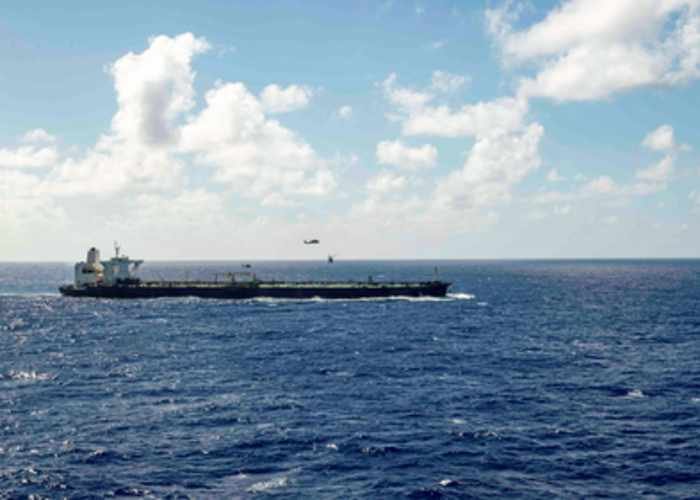
The debate comes as the Indian and Pacific oceans remain strategically important for global trade and maritime security, with growing competition among major powers increasing the importance of ports, shipping routes and maritime infrastructure across the wider Indo-Pacific.
 FOLLOW NOW