

Washington, September 27, 2026 (Yes Punjab News)
A newly identified software glitch affecting some Boeing 737 MAX aircraft could disable an automated navigation function after pilots abandon a landing attempt, prompting a review by US aviation regulators, The Wall Street Journal reported.
The issue emerged following a cockpit software update and can occur when pilots alter their planned flight path after a missed approach. In one scenario, pilots may have to fly manually without certain autopilot functions, potentially increasing crew workload while the aircraft is at low altitude and could be operating in adverse weather.
Boeing has acknowledged the problem but said it does not pose a safety risk. The company notified 737 MAX operators about the issue in late August and said existing pilot procedures were sufficient to manage such situations.
“We shared information with operators that reinforced existing pilot procedures for safely handling such cases,” Boeing said, adding that engineers were working on a software update to permanently resolve the issue.
The manufacturer is also developing a procedure that would allow pilots to restore the automated navigation function if it becomes unavailable.
Southwest Airlines and United Airlines have told Boeing they do not want to take delivery of new 737 MAX aircraft carrying the affected software, according to industry officials cited by the Journal. Both airlines have requested an earlier software version instead.
The Federal Aviation Administration is investigating the issue and will take action if necessary, a senior agency official told the newspaper. The review could also have implications for regulatory approval of Boeing’s newer MAX 7 and MAX 10 variants if the FAA determines that the software problem creates an unsafe condition.
The FAA approved the MAX 7 for passenger service last month, while Boeing CEO Kelly Ortberg has said he expects the MAX 10 to receive regulatory approval soon.
The issue comes as airlines await deliveries of the newer aircraft. Southwest has been waiting for years for the MAX 7 and plans to introduce it next year, while Delta Air Lines, United Airlines, American Airlines and Alaska Airlines have MAX 10 aircraft on order.
It remains unclear how many aircraft worldwide are operating with the affected software. Boeing said it was working to establish an accurate number because airlines are not required to notify the manufacturer whenever they install a software update.
Cirium data shows that 2,422 737 MAX 8 and MAX 9 aircraft are currently flying worldwide. Alaska, American, Southwest and United have said none of their aircraft is equipped with the affected software. Boeing has told operators they can revert to an earlier software version.
Boeing initially expected to issue further guidance by November and provide a permanent software fix in early 2028, but the company now says it is seeking to accelerate both timelines.
The manufacturer said it first became aware of the issue through a MAX operator in November 2024. At that stage, the problem did not meet Boeing’s threshold for a formal safety review. The company began a formal review this month after receiving additional feedback and subsequently shared its findings with the FAA.
WestJet said the issue was not considered a safety concern for its operations, citing existing procedures and training to manage such events. GE Aerospace, which developed the software, said it was supporting the FAA’s evaluation.
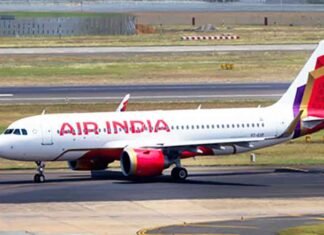
The development is also being closely watched in India, where Akasa Air operates an all-Boeing 737 MAX fleet and Air India Express operates 737-8 aircraft alongside older 737 models. The Journal did not identify any Indian carrier as operating aircraft with the affected software, and there is no public indication of flight disruptions in India linked to the issue.
 FOLLOW NOW