

Washington, September 15, 2026 (Yes Punjab News)
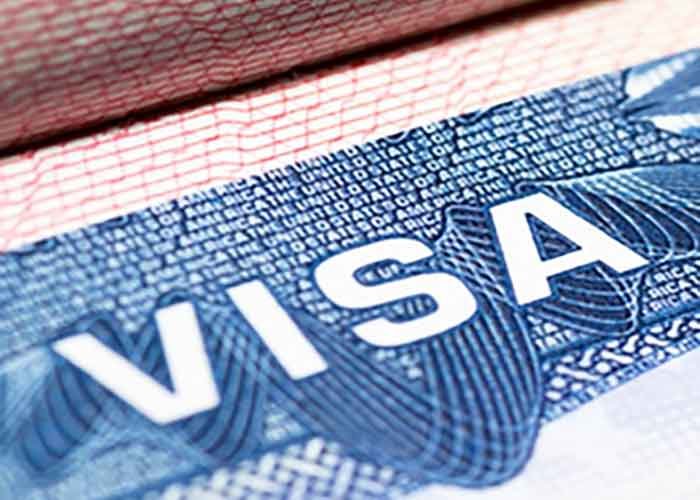
A US federal judge has temporarily blocked the Trump administration’s proposed four-year limit on international student visas, providing relief to foreign students and researchers, including thousands from India.
Judge F. Dennis Saylor IV of the US District Court in Boston issued a nationwide preliminary injunction on Monday, a day before the Department of Homeland Security (DHS) rule was scheduled to take effect.
The regulation sought to replace the longstanding “duration of status” system, under which international students can remain in the US while enrolled in an authorised academic programme. Under the proposed system, students requiring more than four years to complete their studies would have had to seek an extension from immigration authorities.
The rule would also have restricted students’ ability to change academic programmes, transfer universities or pursue another degree at the same level without government approval. Visiting scholars and foreign journalists would have been subject to related restrictions.
Saylor described the government’s justification for the rule as “exceptionally weak”, saying the existing system had contributed to major advances in science, medicine and technology as well as significant economic growth.
If implemented, the restrictions could cause damage to US universities and the broader economy that would be “likely to be catastrophic”, he wrote.
The judge also noted the contributions of international graduates to innovation, saying immigrants who attended American universities had been named as inventors on a disproportionate share of patents and had received a disproportionate number of Nobel Prizes.
The government had argued that the existing system was outdated and needed to be replaced to “safeguard national security”. While acknowledging that the system was “not without its problems”, Saylor said the administration appeared to be seeking to substantially reduce the number of foreign students, researchers, professors and journalists in the country.
“The government’s contention that the rule is necessary to safeguard national security borders on the absurd,” he wrote.
The lawsuit was filed by higher-education organisations and labour unions, including the Presidents’ Alliance on Higher Education and Immigration, NAFSA: Association of International Educators and the Association of Independent Colleges and Universities in Massachusetts. They argued that the four-year deadline was arbitrary and could undermine universities’ ability to attract international talent and conduct advanced research.
The proposed restrictions were expected to affect doctoral students particularly hard. National Science Foundation data cited in reports showed that doctoral programmes take a median of 5.7 years to complete.
Saylor also questioned the prospect of immigration officials having greater influence over academic decisions, warning that the system could potentially be used to penalise individuals whose research or views were disfavoured by officials.
Nearly 22,000 public comments were submitted on the regulation, most of them opposing the changes. The next court hearing is scheduled for October 2.
NAFSA-cited figures also showed that international applications through the Common Application fell 10 per cent during the latest admissions cycle, while doctoral applications declined 21 per cent.
The preliminary injunction does not permanently invalidate the regulation. It preserves the existing system while the court considers the case, and the administration can appeal the ruling.
 FOLLOW NOW