
HARISH MONGA
September 28 marks the birth anniversary of Shaheed-e-Azam Bhagat Singh, one of the most prominent young revolutionaries of India’s freedom struggle. Born in 1907 into a family with a strong nationalist background, Bhagat Singh grew up in an environment that shaped his political consciousness and commitment to the freedom movement. His father Kishan Singh and other members of his family had been associated with the nationalist struggle.
Bhagat Singh is widely remembered for his revolutionary activities and his execution by the British colonial government on March 23, 1931. However, reducing his legacy merely to a pistol, a bomb and the gallows does not fully reflect the breadth of his personality. He was also a serious reader, writer and thinker who engaged deeply with history, politics, socialism and questions concerning society and human freedom.
This intellectual side of Bhagat Singh deserves particular attention, especially among the younger generation.
While studying at National College, Lahore, Bhagat Singh participated in cultural and theatrical activities and became increasingly involved in political and intellectual discussions. He also contributed writings to newspapers and periodicals and was associated with publications connected with the revolutionary movement. His writings show a young man increasingly interested in developing ideas rather than merely participating in political action.
His understanding of revolution also evolved with time. In his writings and statements, Bhagat Singh argued that revolution could not simply be equated with bombs and pistols. He emphasised the importance of ideas, political consciousness and organised effort. In a statement before the court, he made it clear that the revolution he envisaged was not merely a cult of the bomb and pistol.
The Central Legislative Assembly bombing of April 9, 1929, remains one of the most debated episodes of his life. Bhagat Singh and Batukeshwar Dutt threw bombs inside the Assembly and deliberately remained at the scene rather than escaping. Historical accounts describe the devices as intended to create a dramatic protest rather than cause mass casualties. The revolutionaries used the action to draw attention to their political message and subsequently used their trial as a platform to communicate their views.
Significantly, Bhagat Singh’s later message to students in October 1929 stated that young people should not simply take to pistols and bombs and that they had larger responsibilities. His emphasis was increasingly on political education, organisation and taking the message of revolution to ordinary people.
His intellectual appetite was remarkable for a young man who died at just 23. Accounts of his prison years describe extensive reading and writing. His interests ranged from Marx, Engels and Lenin to Bertrand Russell, Thomas Paine, Victor Hugo, Dostoevsky, Tagore and Omar Khayyam. Recent archival research has also highlighted the large body of letters, essays, court statements and other writings produced by Bhagat Singh during his short life.
His prison writings included serious reflections on revolution, religion, society and political work. His essay Why I Am an Atheist and his final appeal, To Young Political Workers, remain important documents for understanding the intellectual development of the young revolutionary.
This is perhaps the lesser-known Bhagat Singh that today’s youth need to discover.
At a time when young people are often surrounded by distractions, addiction and a culture of instant gratification, the life of Bhagat Singh offers another message: read, think, question, write and develop the courage to form one’s own ideas.
His legacy need not be confined to posters, slogans, costumes or ceremonial celebrations. A deeper tribute would be to understand the questions he raised, study his writings and examine the social and political conditions about which he was concerned.
Bhagat Singh wanted freedom from colonial rule, but his writings also reflected concerns about exploitation, inequality and injustice. His conception of revolution was broader than a change of rulers; it involved transforming conditions that he regarded as unjust.
He appeared on India’s political horizon like a comet and, within a remarkably short life, became an enduring symbol of courage and sacrifice.
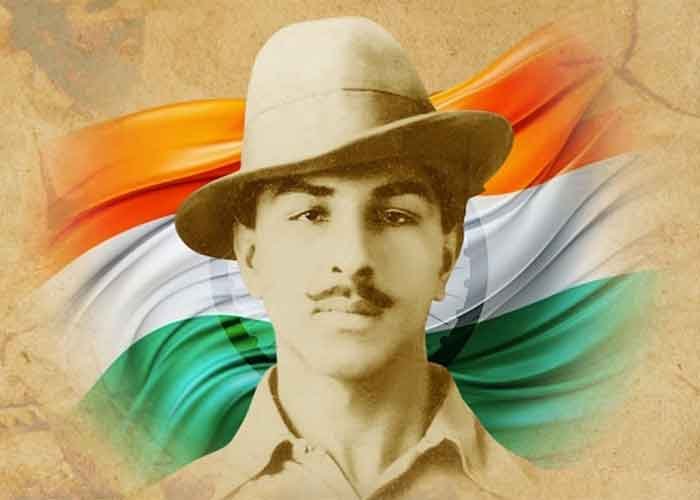
But perhaps the most meaningful way to remember the 23-year-old revolutionary is not merely to look at the photograph of Bhagat Singh with a hat and moustache.
Look at the book in his hand. Read what he wrote. Question what he questioned.
And understand why, at such a young age, he believed that the sword of revolution had to be sharpened on the whetting stone of ideas.
That intellectual Bhagat Singh — the reader, writer and thinker — remains as relevant to the younger generation as the martyr whose name has become immortal in India’s history.
Remembering Bhagat Singh, therefore, should not be limited to remembering how he died. It should also mean understanding how he thought.
HARISH MONGA
September 28, 2026
 FOLLOW NOW