
Washington, September 5, 2026 (Yes Punjab News)
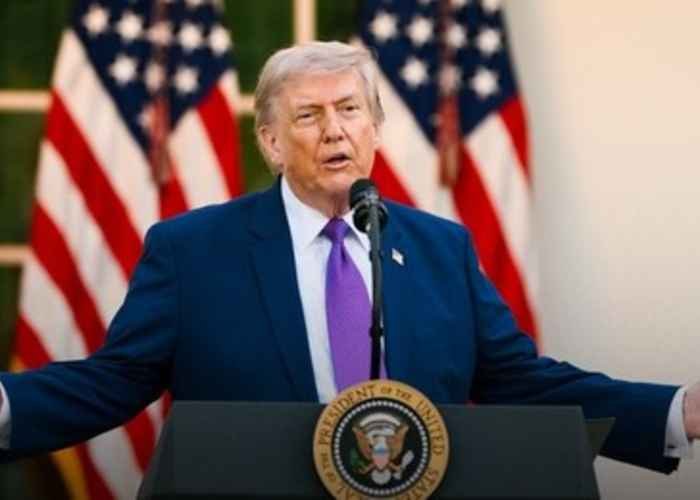
US President Donald Trump has described the confrontation with Iran as an intermittent “military conflict” rather than a full-scale war, saying the situation was relatively limited for the United States despite the deaths of 18 American service members.
Trump made the remarks while responding to questions about Vice President J.D. Vance’s reluctance to characterise the confrontation as a war, even as the US resumed strikes against Iran.
“A lot of people don’t call it a war. I call it a military conflict because it’s small potatoes for us. It’s not a big thing,” Trump told reporters.
He said the confrontation had involved intermittent strikes and insisted that the US was not currently engaged in fighting. Trump also maintained that the operation had prevented Iran from obtaining a nuclear weapon.
“Iran will not have a nuclear weapon. We’ve stopped them from having,” he said.
Trump warned that the US could strike a site he referred to as “Pickaxe” if it detected renewed activity there, saying Washington was monitoring developments across Iran.
The President also claimed that US forces had destroyed Iranian radar systems, aircraft and other equipment protecting the Strait of Hormuz. He said American minesweepers had removed mines from the strategic waterway and that oil shipments were moving through the strait.
“We control the Hormuz Strait, and we control it very strongly,” Trump said.
Trump further claimed that the US had “essentially taken over Iran” and said there had been no shooting for several days following the latest strikes. He suggested Iran could take 25 years to rebuild if the US ended its operation immediately, while saying he wanted to eventually leave so that the next US President would not have to deal with the issue.
On China’s role, Trump said he had personally asked Chinese President Xi Jinping not to intervene and claimed Beijing’s involvement had remained limited.
Trump also pointed to new pipelines and overland routes in the Middle East as alternatives to the Strait of Hormuz, saying the strategic waterway was “not what it used to be.”
 FOLLOW NOW