
New Delhi, September 4, 2026 (Yes Punjab News)
Former members of the banned Students Islamic Movement of India (SIMI) have resurfaced in several states and are allegedly establishing independent modules linked to the Islamic State (IS), according to intelligence assessments.
Officials said the emerging pattern has created a fresh challenge for security agencies because the suspected modules are largely autonomous, with no clear organisational structure or established communication channels connecting them.
SIMI was banned by the Centre in 2001. After remaining relatively inactive for a period, some of its former members became associated with the Indian Mujahideen, which was subsequently targeted by Indian security agencies.
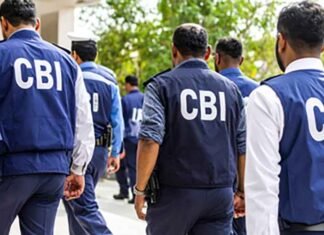
An Intelligence Bureau official said several former SIMI members are now believed to have aligned themselves with the Islamic State and are operating independently.
“They run their operations individually and do not mix operations with other former members. This has created a major problem for the Indian agencies as none of these modules are structured and inter-linked. This makes it hard to track such persons as there is no proper organisational structure,” the official said.
According to officials, security agencies have detected such suspected modules in Uttar Pradesh, Madhya Pradesh and Maharashtra. They said the individuals involved had largely remained out of the spotlight for years before allegedly becoming active again.
Another official said some of the suspected operatives had assumed self-styled leadership positions and were propagating the idea of establishing a caliphate and transforming India into an Islamic State.
The case of Padgha in Maharashtra’s Thane district has been cited by officials as an example of this pattern. Mohammad Saquib Abdul Hamid Nachan, described as a former SIMI member, has been associated with radical organisations, including SIMI and Jamaat-e-Islami, since the 1980s.
Following the ban on SIMI, Nachan allegedly maintained a low profile before resurfacing nearly two decades later and becoming involved in propagating Islamic State ideology, according to officials.
He allegedly recruited more than 30 youths from states including Uttar Pradesh, Karnataka, Delhi, Madhya Pradesh and Maharashtra, officials said.
An official described the emergence of individuals who independently declare themselves emirs and attempt to recruit followers for the Islamic State as a growing security concern.
The issue, another official said, has now assumed a pan-India dimension. Security agencies have found that some individuals with past associations with SIMI, the Indian Mujahideen or the Popular Front of India (PFI) have allegedly resurfaced and begun operating under the banner or ideology of the Islamic State.
The PFI was banned by the Central government in September 2022.
Officials said suspected operatives often deliberately maintain a low profile to avoid detection while continuing recruitment and ideological propagation.
“Such individuals deliberately keep a low profile and avoid coming under the radar of security agencies. However, they continue to operate quietly in the background, carrying out recruitments and propagating the ideology of the Islamic State. It is an operation that runs largely on autopilot and poses a threat to national stability,” an official said.
According to the assessment, the suspected modules operating in different parts of the country are not directly linked to one another and largely function independently. Their broader stated objective, officials said, is to establish an Islamic State, initially through region-specific efforts.
Officials said the suspected long-term strategy involves eventually bringing such regional modules together on a pan-India scale.
The intelligence inputs highlight the difficulty faced by agencies in identifying and monitoring loosely organised extremist networks that lack a conventional command structure.
 FOLLOW NOW