


Warsaw, September 4, 2026 (Yes Punjab News)
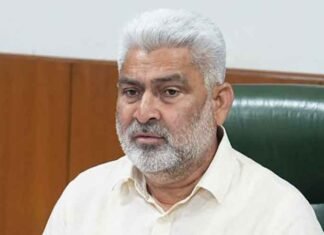
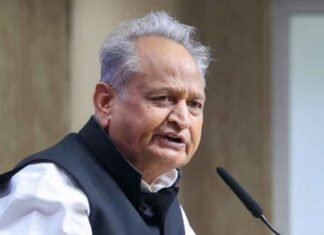
External Affairs Minister S. Jaishankar on Friday said India has maintained continuous engagement with both Russia and Ukraine and is exploring ideas that could help de-escalate the conflict and eventually bring the war to an end.
Addressing a joint press conference with Polish Foreign Minister Radosław Sikorski in Warsaw, Jaishankar said India has held detailed discussions with both sides as part of its efforts to explore possible avenues for reducing tensions.
“You will appreciate that beyond a point, I can’t go into specifics. What I can tell you is that we’ve been in continuous touch with the Ukrainian side, also with the Russian side,” Jaishankar said.
He said he had recently travelled to Moscow and Kyiv, while Prime Minister Narendra Modi and Russian President Vladimir Putin had also met in Bishkek.
“We had were discussions, fairly detailed discussions with the Russian side. Yesterday, with the Ukrainian side. And, what we are trying to do is to see if, you know, there are ideas and suggestions that can be developed in some way in which they would contribute to the mitigation, ideally the cessation of the conflict,” he added.
Jaishankar stressed that the Ukraine conflict would ultimately have to be resolved through dialogue, diplomacy and negotiations, rather than through decisions on trade in commodities such as oil, minerals or fertilisers.
Responding to questions about India’s continued purchase of Russian oil, he said New Delhi has a responsibility to ensure energy security for its 1.4 billion people amid a challenging global energy environment.
“What I said in Kyiv was that we have a responsibility to meet the energy security needs of 1.4 billion people. And to do that in an energy situation, global energy situation, that is very difficult and challenging,” Jaishankar said.
He argued that the conflict, which has now entered its fifth year, would not end simply because countries chose to buy or stop buying particular commodities.
“This conflict, which is now in its fifth year, this war is not going to end … because somebody chose to or not buy oil or alumina or fertilisers or metals and minerals. It will end when there is diplomacy, when there is dialogue, when there is negotiation,” he said.
“I think let’s diagnose the problem right. The issue is a conflict; it’s a war, and the solution to that is not in trade. The solution to that is in negotiations,” he added.
Sikorski, responding to the same question, said Poland’s position was well known but acknowledged Jaishankar’s explanation of India’s position.
“Our preferences are well known, but I think the minister has explained his reasons eloquently,” the Polish Foreign Minister said.
India Supports Legal Migration of Workers
On the issue of Indian workers being recruited through legal channels and protected against exploitation, Jaishankar said India strongly supports regulated and lawful mobility of its citizens.
He said India has entered into bilateral agreements with several countries, including European nations, to facilitate legal movement of workers.
“Where India is concerned, without exception, in every destination we actually strongly, firmly, and unambiguously support legalized mobility of people,” he said.
“We do not support illegal migration or mobility. We do not support irregular migration or mobility. So we’re very clear in terms of our responsibility toward our own peoples,” Jaishankar added.
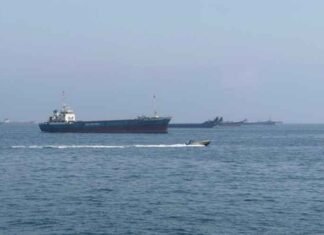
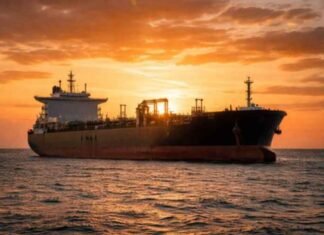
Sikorski said the two sides also discussed the safety and security of Indian and Polish mariners working aboard ships operating in the Persian Gulf region.
He said sailors from both countries can face dangers when vessels become stranded or come under attack, including the risk of being targeted or kidnapped.
“We actually discussed an issue of common concern, namely that both Indians and Poles serve as mariners on board ships, which get stuck on the wrong side of the Persian Gulf or get hit,” Sikorski said.
He added that ensuring the safety and security of people working at sea was a shared concern for India and Poland.
“Safety and security on the high seas is a common concern to both of our countries,” the Polish Foreign Minister said.
 FOLLOW NOW