
New Delhi, July 27, 2026 (Yes Punjab News)
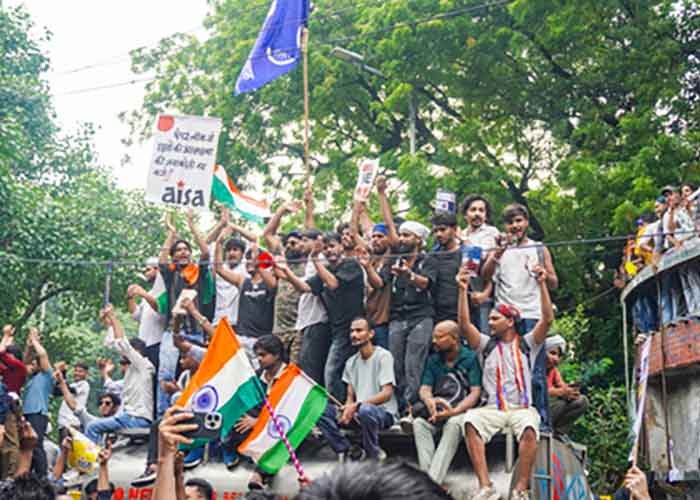
The recent student gathering at Jantar Mantar over alleged examination irregularities has evolved into a broader reflection on democratic participation, institutional accountability and the aspirations of India’s youth, according to a commentary by a former diplomat and strategic affairs expert.
The article argues that while the immediate trigger for the protests was controversy surrounding an examination, the movement came to represent wider concerns over public trust in institutions, merit-based opportunities and the future of education and employment.
It notes that the protests were distinctive because they were not driven by traditional political, caste or religious mobilisations. Instead, students from across the country assembled voluntarily, reflecting growing anxieties among middle-class and lower middle-class families that view education as the primary route to social mobility and economic security.
The commentary describes Jantar Mantar as a democratic space where citizens seek to make their voices heard when they believe conventional institutional channels have failed to adequately address their concerns. It contends that while Parliament remains the constitutional forum for governance, public confidence is sustained through continuous engagement with citizens beyond legislative institutions.
The author further observes that today’s digitally connected youth are motivated more by aspirations than ideology, raising questions about the credibility of institutions, fairness in recruitment and examinations, and employment opportunities. These concerns, it argues, cut across regional, social and economic divisions.
The piece also highlights the importance of innovation, entrepreneurship and stronger collaboration between educational institutions, industry and government to address future employment challenges. It suggests that universities should expand innovation and incubation ecosystems to encourage students to develop solutions in areas such as artificial intelligence, healthcare, agriculture, water management and energy.
Emphasising that constructive criticism should be viewed as an opportunity rather than a threat, the commentary states that democratic governance is strengthened when governments remain responsive to public concerns through dialogue and engagement.
Concluding, the author says the student congregation at Jantar Mantar should be seen as an affirmation of India’s democratic resilience, noting that direct engagement between senior government leaders and protesting students demonstrated the capacity of democratic institutions to respond to public sentiment. The article describes Jantar Mantar as a symbolic bridge between citizens and governance, reinforcing that the strength of democracy lies in dialogue, trust and continuous public participation.
 FOLLOW NOW