
Bhubaneswar, September 3, 2026 (Yes Punjab News)
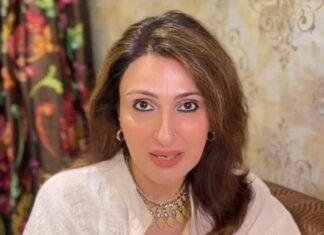
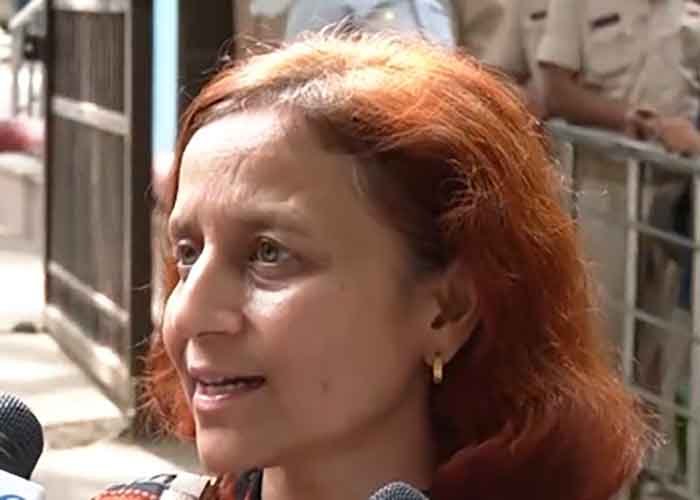
Gitanjali Angmo, wife of climate activist Sonam Wangchuk, has urged the government to treat the ongoing protests as a “wake-up call” and proactively undertake comprehensive reforms in India’s education and examination systems.
In an exclusive interview with IANS, Angmo said the issue should not be treated as a small or isolated matter, warning that failure to address structural concerns could create significant social pressure and potentially lead to a larger movement in the future.
Discussing the National Education Policy (NEP), examination reforms, teachers, Vande Mataram, Indian philosophical traditions, political polarisation, patriotism and the need to rediscover Indian knowledge systems, Angmo said the NEP was a strong document but its success would depend on implementation.
She said the traditional Gurukul system was centred on the teacher, whose conduct and influence played a crucial role in shaping a child’s personality rather than merely delivering information or completing a syllabus.
Angmo argued that teaching must become one of India’s most respected and well-paid professions. Talented people should actively aspire to become teachers rather than entering the profession only after other career options fail, she said.
She also called for strong and equal basic education for every child at least until Class 10, regardless of whether they attend a government or private school. According to her, the quality of government schools and basic child nutrition also need greater attention.
Calling education a long-term national project, Angmo said reforms should be insulated from political cycles. She suggested establishing an independent educational commission that could pursue reforms over 20 to 30 years without being affected by changes in government.
On examination reforms, she said efforts should go beyond preventing paper leaks and securing examination papers. The larger question, she said, is what examinations are actually designed to assess.
“We must ask what the purpose of an examination actually is,” she said, arguing that assessments should measure understanding, creativity, application of knowledge, problem-solving and independent thinking rather than merely the ability to memorise and reproduce information.
Referring to the examination reforms committee headed by Nandan Nilekani, Angmo said technology could strengthen the security and integrity of the examination process but could not answer the deeper philosophical question of what education and examinations should achieve.
On the ongoing debate around Vande Mataram, Angmo said opposition based on references to Hindu deities reflected what she described as an immature understanding of culture. She said the song should be understood as a symbol of a deep relationship with the land and not merely as a political slogan.
She argued that references to figures such as Durga and Lakshmi could be understood through the values they represent, including power and abundance. Angmo also said Vande Mataram had faded from collective memory and needed to be understood and discussed among young people.
She welcomed the singing of the full national song from the Red Fort on Independence Day, saying the focus should not only be on performing it but also understanding its historical and philosophical significance.
On political polarisation around Hindu culture and Vande Mataram, Angmo said harmony should not mean making everyone identical. She compared society to a jigsaw puzzle or botanical garden, where different elements contribute to a larger whole.
She said India had historically assimilated outside influences without necessarily abandoning its own cultural identity. Referring to former President A.P.J. Abdul Kalam’s reading of the Upanishads and the Gita and her own interest in Sufi poetry, she argued that people should be free to learn from traditions beyond their own.
Angmo also defended the importance of Vande Mataram alongside efforts to tackle poverty, unemployment and other practical challenges. She said the two should not be viewed as competing priorities, arguing that a sense of belonging to the nation could inspire citizens to contribute more actively to solving its problems.
She called for a shift from asking “What can India do for me?” to “What can I do for India?” and said nation-building should be viewed as a responsibility shared by citizens and the government.
Discussing the phrase “Dimagi Naxal”, Angmo said questioning and enquiry should not automatically be viewed negatively. She cited the questioning traditions of the Upanishads and the dialogue between Arjuna and Krishna in the Bhagavad Gita to argue that intellectual enquiry was an important part of India’s philosophical traditions.
At the same time, she said the intent behind a question mattered and that different motivations should be distinguished.
Angmo called for greater integration of Indian knowledge systems into mainstream education. She cited Nyaya and Vaisheshika philosophies as examples of Indian traditions dealing with logic and reality and argued that Indian philosophical schools should be studied alongside Western thinkers.
She also said Sanatan Dharma should not simply be categorised as “Right Wing” or traditional because it contains a long tradition of enquiry, evolution and multiple philosophical paths. Describing Sanatan Dharma as “liberating”, she said the conventional Left-Right political framework did not fully capture the Indian context.
Similarly, she argued that India need not view society exclusively through Western categories of Socialism and Capitalism, pointing to the traditional concepts of Artha, Kama, Dharma and Moksha and the historical role of Indian business houses and rulers in social welfare.
Angmo said India needed to rediscover its philosophical vocabulary, including the broader meaning of Dharma, which she explained as coming from the root “Dhri” and referring to that which holds or sustains.
She said colonialism and earlier disruptions had contributed to Indians becoming distanced from their intellectual traditions, but rediscovering Indian thought should not mean rejecting Western knowledge. Instead, she advocated engaging with both traditions from a position of confidence and understanding.
On political polarisation, Angmo said vote-bank politics had contributed to divisions and argued that national interest should come before political parties, ideologies and narratives. India’s diversity, she said, should become a source of strength rather than conflict.
Speaking about Odisha, her birthplace, Angmo said the state’s reverence for Sri Aurobindo had deeply influenced her intellectual and spiritual journey. She said Sri Aurobindo’s philosophy helped her move beyond binaries such as Left versus Right, Socialism versus Capitalism and secular versus sacred.
Defining patriotism, Angmo said it meant discovering one’s purpose, contributing honestly through one’s profession and working in the national interest. She said bureaucrats should work honestly, ministers should prioritise national interest and educators should strengthen education and research.
She also argued that citizens should look beyond external enemies and examine whether their own actions contribute to nation-building.
Explaining why Odisha remains special to her, Angmo described the state as possessing an innate spiritual character and referred to its traditions associated with Jagannath, Krishna, Shiva, Durga and Saraswati.
She said understanding the deeper meanings behind religious symbols and respecting diverse traditions could help build a stronger nation.
For Angmo, nation-building ultimately means understanding India’s roots, developing its highest potential, working in the national interest and sharing its knowledge and values with the world.
 FOLLOW NOW