



New Delhi, September 3, 2026 (Yes Punjab News)
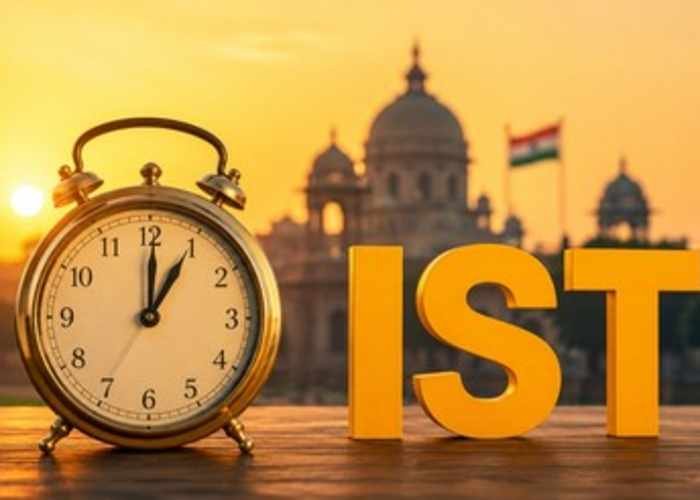
The government has notified the Legal Metrology (Indian Standard Time) Rules, 2026, marking a major step towards establishing Indian Standard Time (IST) as the common, legally recognised and traceable time reference across the country.
The rules will come into force 180 days after their publication in the Official Gazette and are aimed at supporting the government’s “One Nation, One Time” vision by ensuring that critical sectors and digital systems operate using a common and reliable time reference.
The framework covers the generation, maintenance, dissemination and use of IST. Accurate time synchronisation and reliable timestamps are essential for telecommunications, financial transactions, digital payments, power grids, transportation, data centres, government information systems and other critical services.
The initiative also has a cybersecurity dimension, as accurate timestamps help correlate events across systems during cyber incidents and support effective security monitoring. The government statement noted that the CERT-In Guidelines on Information Security Practices for Government Entities, 2023, recommend synchronising ICT systems with standard time sources, including the National Physical Laboratory (NPL) and National Informatics Centre (NIC).
To ensure geographical reach and reliable dissemination of traceable IST, CSIR-NPL, ISRO and the Department of Legal Metrology under the Ministry of Consumer Affairs have established secondary timescales at five Regional Reference Standard Laboratories in Ahmedabad, Bengaluru, Bhubaneswar, Faridabad and Guwahati.
These secondary timescales remain continuously traceable to IST maintained by CSIR-NPL, creating a distributed national timing architecture. CSIR-NPL also provides IST traceability to ISRO for the NavIC system, enabling satellite-based dissemination.
IST can be distributed through network technologies such as NTP and PTP, satellite systems including NavIC, and high-precision optical fibre technologies such as White Rabbit, which are being tested.
The Legal Metrology Department will serve as the regulatory and enforcement authority, while CSIR-NPL, India’s National Metrology Institute, will provide the scientific foundation and traceability for IST.
 FOLLOW NOW












































































 Rules, 2026 to establish IST as India’s common legal time reference.)