

New Delhi, October 16, 2026 (Yes Punjab News)
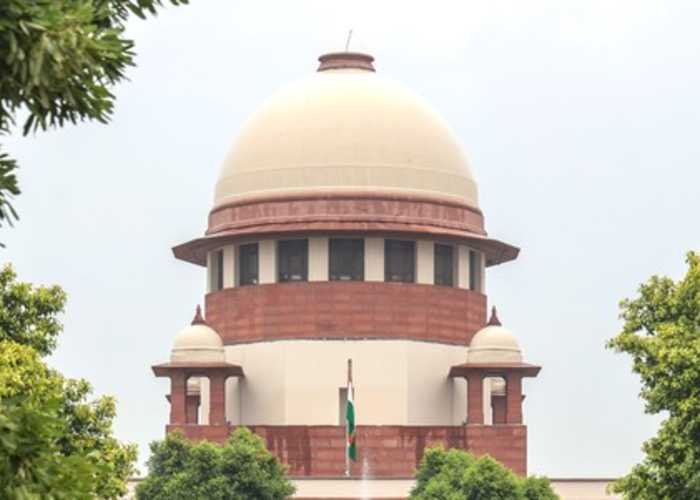
The Supreme Court on Friday issued notice to the Centre on a petition seeking a comprehensive regulatory framework to protect children from risks associated with social media, including age-based access restrictions and safeguards against online exploitation.
A Bench comprising Chief Justice of India Surya Kant and Justice Joymalya Bagchi issued notice on the plea filed by The Emerald Heights International School and its Director (Academics), Siddharth Singh Girnar. The court tagged the matter with another pending petition raising a similar issue and scheduled the next hearing for December 3.
The petition, filed against the Union government and several authorities, including the Ministry of Women and Child Development, the Ministry of Law and Justice and the National Commission for Protection of Child Rights, questions whether the existing legal and regulatory framework adequately addresses the risks children face on commercial social media platforms.
The petitioners argued that many platforms prescribe a minimum age of 13 years based on self-declaration, whereas Indian law recognises everyone below 18 as a child. They cited the Digital Personal Data Protection Act, 2023, which provides for safeguards such as verifiable parental consent and restrictions on tracking, behavioural monitoring and targeted advertising involving children.
Describing the current framework as fragmented and inadequately implemented, the plea called for uniform rules covering age verification, prevention of underage access, parental involvement and platform accountability.
The petitioners cited concerns over cyberbullying, harassment, exposure to harmful content, unwanted contact from strangers and risks of grooming and exploitation. They also pointed to possible effects of prolonged social media use, including sleep deprivation, anxiety, reduced concentration and declining academic engagement.
The plea seeks a dedicated regulatory framework providing for privacy-preserving age verification, graded access based on age, restrictions on harmful content and mandatory privacy settings for children’s accounts.
It also seeks effective reporting systems, prompt removal of harmful material and legal safeguards against sexual solicitation, harassment, cyberbullying and the circulation of private images, alongside evidence preservation where required by law.
As an alternative, the petitioners have asked the court to direct authorities to impose restrictions on children creating or using social media accounts if other protective measures are found insufficient. The Supreme Court has sought the Centre’s response; no final decision on the requested measures has been reported.
 FOLLOW NOW