


KBS Sidhu congratulates the UT Administration, seeks a plain-language explanation in three languages and Punjab–Haryana cooperation to protect the lake
Chandigarh, October 16, 2026 (Yes Punjab News)
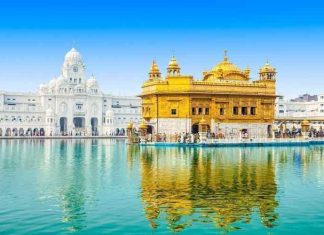
The designation of Sukhna Wetland as Chandigarh’s first Wetland of International Importance under the Ramsar Convention should come with a simple public explanation. The word “Ramsar”, placed beside a lake, can easily be confused with Ramsar Sarovar, the historic sarovar at Amritsar. In fact, “Ramsar” here refers only to the city in Iran where the international wetlands convention was adopted in 1971, and Sukhna’s name and identity are unchanged. That is the suggestion of KBS Sidhu, retired Special Chief Secretary, Government of Punjab, and former Deputy Commissioner, Amritsar.
KBS Sidhu congratulated the Chandigarh Administration on the recognition. In a demi-official letter to the Governor of Punjab and Administrator, Union Territory of Chandigarh, he described it as a welcome acknowledgement of Sukhna’s ecological value and an occasion to renew the city’s commitment to the lake.
He observed that conservation specialists know the term “Ramsar Site” well, but many members of the public may not. Chandigarh’s own name, by contrast, has deep local roots: the city takes its name from the nearby Chandi Mandir, dedicated to Goddess Chandi, a form of Goddess Durga revered especially during the Navratras. A brief explanation would make clear that the Ramsar designation does not rename Sukhna Lake or create any new association for it.
KBS Sidhu has requested that the Administration:
• retain the name “Sukhna Wetland, Chandigarh” prominently in all publicity;
• add a short explanatory line on official websites, information boards and publicity material, in English, Hindi and Punjabi; and
• examine, with expert advice and through the prescribed channels, whether a case exists for further recognition of Sukhna under an appropriate UNESCO framework.
On the last point, he cautioned that any such initiative should be an evidence-based assessment, without presuming eligibility. He noted that a Ramsar listing is a distinct recognition and is not, by itself, a UNESCO World Heritage designation.
The letter places conservation at the centre. KBS Sidhu said the true value of international recognition lies in sustained care for the lake’s water quality, its wildlife habitats and its catchment. He noted that the Union Ministry of Environment, Forest and Climate Change, by its notification of 18 January 2017, has declared an Eco-Sensitive Zone around the Sukhna Wildlife Sanctuary on the Chandigarh side. Since the greater part of the sanctuary and the lake’s catchment lies in Punjab and Haryana, however, he suggested that the UT Administration take up the matter with both State Governments in a spirit of cooperation, so that the pristine waters of Sukhna Lake are preserved without affecting the livelihood and agricultural rights of landowners in the vicinity.
“Sukhna has earned its place on the world’s map of important wetlands, and every resident of Chandigarh can share in that pride,” KBS Sidhu said. “A one-line explanation in three languages costs nothing and lets the public understand exactly what this honour means.”
He added: “The real measure of this recognition will not be a certificate, but whether Sukhna’s water, birds and catchment are better protected ten years from now.”
KBS Sidhu, IAS (Retd.), superannuated as Special Chief Secretary, Government of Punjab, in July 2021, and earlier served as Deputy Commissioner, Amritsar.
Contact: kbs.sidhu@gmail.com | 7837-001-001
 FOLLOW NOW